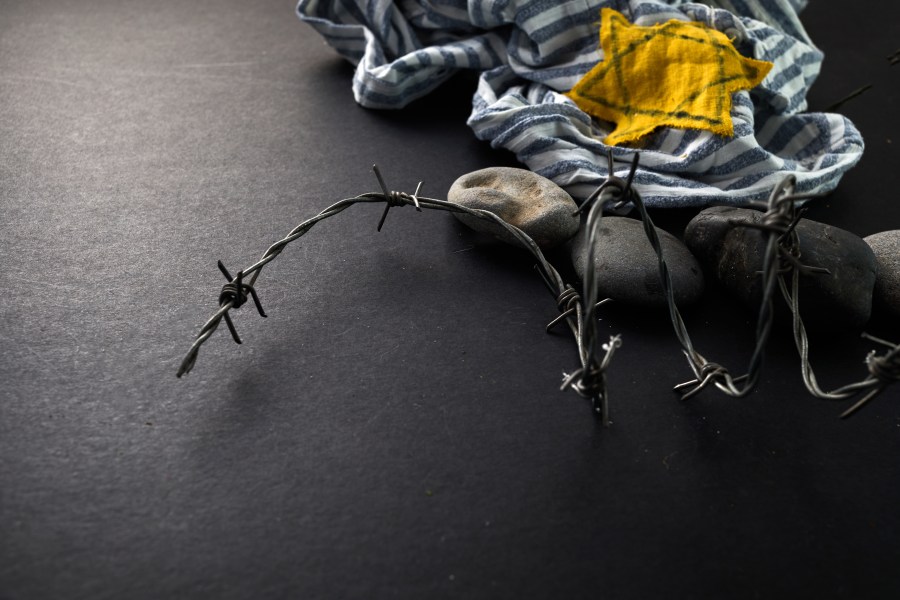
HONOLULU (KHON2) — Every year on Jan. 27, the world comes together to observe International Holocaust Remembrance Day. The United Nations General Assembly designated this date to mark the liberation of Auschwitz-Birkenau in 1945, the largest Nazi concentration and extermination camp, where more than 1.1 million people, mostly Jews, lost their lives.
The day serves as a solemn reminder of the horrific atrocities committed during the Holocaust and encourages us to reflect on the suffering of all victims of Nazi persecution, including Roma, LGBTQ+ individuals and people with disabilities.
“International Holocaust Remembrance Day is not just about remembering the six million Jewish people who died,” said Rabbi-Cantor Cheri Weiss of Temple Emau-El in Honolulu. “It’s also about recognizing all those who suffered at the hands of hatred, those who were persecuted because of their identity, their ethnicity, their disabilities or their beliefs.”
The theme for this year’s commemoration, Holocaust Remembrance for Dignity and Human Rights, underscores the universal importance of this observance.
Rabbi-Cantor Weiss, who leads religious services and works tirelessly to preserve history, brings this remembrance to her own community in Honolulu, ensuring that the lessons of the Holocaust are passed down to new generations.
“We must never forget what happened,” she said. “It’s our responsibility to make sure that those who perished are honored and that we educate others about the dangers of hatred, bigotry and intolerance. If we don’t, history has a way of repeating itself.”
Rabbi-Cantor Weiss holds dual ordinations as both a cantor and rabbi, and she has devoted her life to both music and spiritual leadership.
But her path to becoming a religious leader was not straightforward. As she explained, she never imagined herself in this role. Growing up, she did not see women in clergy positions, especially not in the traditional Jewish communities where she lived.
“It wasn’t an option when I was younger,” she recalled. “I never thought about it, and honestly, I didn’t even know it was possible for a woman. But a mentor once told me I had the calling, and I should become a cantor. I was skeptical, but he said, ‘Where there’s a will, there’s a way.’ And he was right.”
Rabbi-Cantor Weiss’s story is one of perseverance and unexpected opportunity. After years of working as a cantorial soloist and educator, she eventually went on to become both a cantor and a rabbi by earning her dual ordinations after five years of intense study.
“When I decided to keep going and become a rabbi, I didn’t do it for myself. I did it because people needed to see that women could lead in these roles,” she explained. “It was about breaking barriers and offering more opportunities to others.”
Her journey as a religious leader is not just about personal triumph. It’s also about community and remembrance.
Rabbi-Cantor Weiss is passionate about making sure that the lessons of the Holocaust are not lost to future generations.
She leads the Jewish community in Honolulu during solemn ceremonies for Holocaust Remembrance Day known as Yom HaShoah in April and brings together people of different backgrounds to honor the victims of Nazi terror.
“We have a ceremony here in Honolulu every year with music, readings and candle lighting,” Rabbi-Cantor Weiss said. “It’s moving to see so many people come together to reflect on such a painful part of history. The support we receive from local dignitaries, like Mayor Blangiardi, is a testament to the community’s commitment to remembering and learning from the past.”
As a teacher of Jewish history, Rabbi-Cantor Weiss has always believed in the importance of education, even for students who may not yet fully grasp the gravity of what they’re learning.
“It’s hard to talk about the Holocaust with young people who may not want to hear about such darkness,” she said. “But even if they don’t fully understand it at the time, it stays with them. And when they get older, they’ll look at the world differently. It will change how they see the importance of compassion and understanding.”
Rabbi-Cantor Weiss’s perspective on the Holocaust is not just historical; it is deeply personal. Her passion for teaching, sharing stories and leading her community comes from a desire to protect the dignity of all people.
“The idea that human beings could be so full of hate that they would destroy innocent lives is something I can never comprehend,” she said. “But we have to confront it, so we can prevent it from ever happening again.”
As Holocaust Remembrance Day approaches, Rabbi-Cantor Weiss stresses that we are not only remembering those who died, but also ensuring that their stories continue to inspire and educate future generations.
“It’s not enough to just remember,” she said. “We must also teach and act. If we don’t learn from history, we’re bound to repeat it.”
Holocaust Remembrance Day also serves as a powerful reminder of the persistence of anti-Semitism and other forms of hatred. Rabbi-Cantor Weiss shared her concern about the rise of such hatred in the modern world.
“Anti-Semitism has never truly gone away,” she said. “When the political climate allows, it surfaces again; and when it’s not acceptable, it goes underground. That’s why we must stay vigilant and continue to stand up for what’s right. We must protect the dignity of all people, no matter their background or beliefs.”
Looking ahead to the future, Rabbi-Cantor Weiss remains hopeful that education and remembrance will help foster a more compassionate world.
“We must continue to teach our children about the past and remind them that their actions have the power to shape the future,” she explained “The Holocaust is a tragedy that should never be forgotten, but it is also a call to action for all of us.”
As International Holocaust Remembrance Day approaches, Rabbi-Cantor Weiss is dedicated to ensuring that the victims of Auschwitz, as well as those who died in other camps, are not forgotten.
You can click here to learn more about Temple Emanu-El.
Through her work, both as a leader and an educator, she continues to share the important lessons of the Holocaust and to inspire others to create a world built on understanding, kindness and respect for all people.