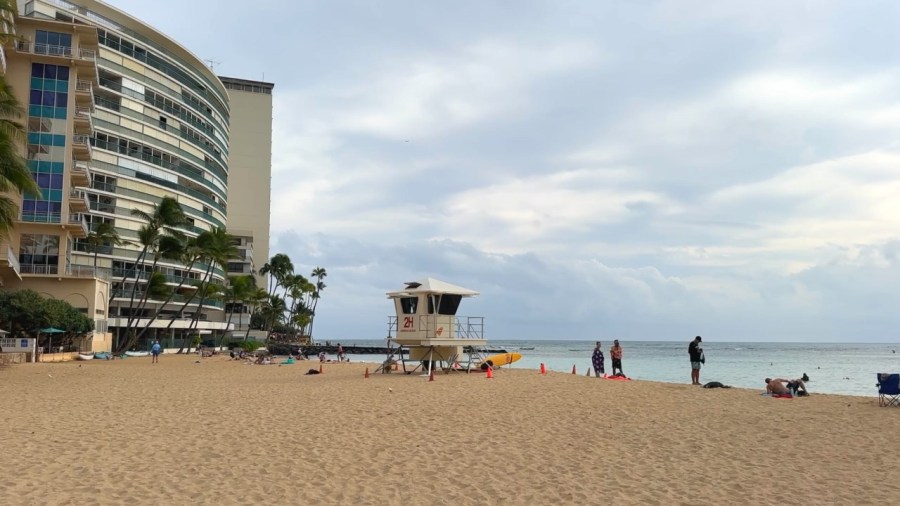
HONOLULU (KHON2) — In the ahupuaʻa of Waikīkī, which lies in the moku of Kona on Oʻahu, stands a popular beach that holds layers of historical significance. We are speaking of Kaimana Beach.
Lying in the morning shadows of Kaimanahila, which is known as Diamond Hill or more commonly as Diamond Head, is a small beach largely known today as Kaimana Beach; the name being associated with the hotel which now resides there.
But just as the hotel has changed over time, so did the name of the beach.
The first hotel in the area was called Park Beach Hotel.
In 1893, a new hotel opened named San Souci, which is French for “without care.”
The beach then took on the name San Souci.
Renowned poet Robert Louis Stevenson described it in part, “lovely scenery, quiet, pure air, clean seawater and heavenly sunsets.”
Kaimana and San Souci are just modern nicknames that reflect the more modern history of this area.
But ancient names such as Kapua or Hononunu reflect older stories.
For example, from this beach looking out, can you imagine seeing 12,000 double-hulled war canoes lining the horizon from Waiʻalae here to Waikīkī?
History shares that, as part of his conquest, King Kamehameha I arrived on Oʻahu in 1795 via the shores of Hononunu.
He and his 10,000 warriors won the island by pushing their enemies up and over the cliff at what became known as the Battle of Nuʻuanu.
History also shares that in 1902, the first telegraphic cable connecting the United States to Hawaiʻi was laid through the Kapua Channel.
Starting in San Francisco and landing at then-San Souci beach, the first successful telegraph was sent just a few days later.
Check out more news from around Hawaii
Till today, freshwater springs within the Kapua Channel continue to prevent coral from growing, keeping the mostly clear.
Did you know? Now you do!