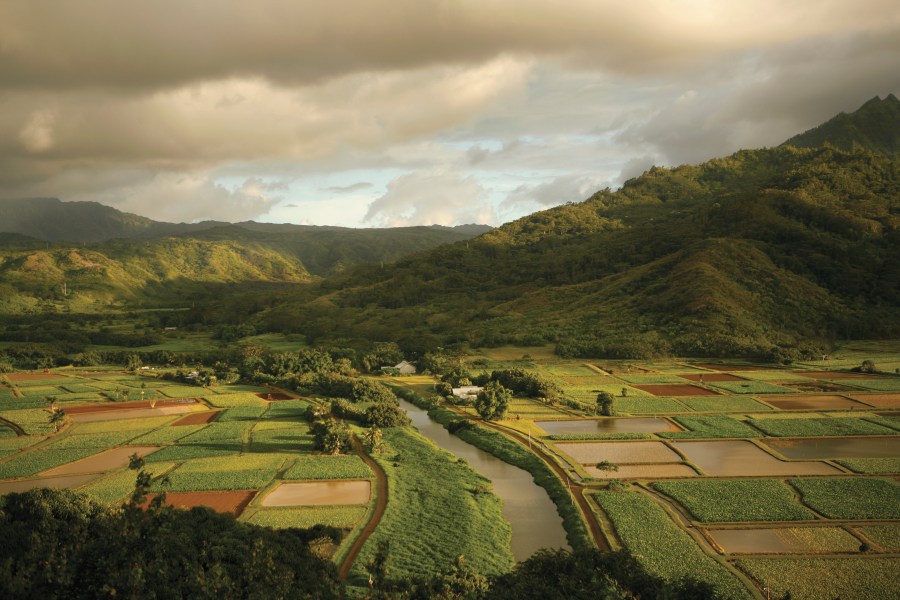
HONOLULU (KHON2) — Hawai‘i is a place of remarkable beauty and culture, but it’s also a place facing significant environmental threats.
Ulalia Woodside Lee, executive director of The Nature Conservancy Hawai‘i and Palmyra program, is on the frontlines of these challenges and working to ensure the islands can thrive for generations to come.
Lee’s perspective is grounded in deep personal and cultural responsibility, and her message is clear: sustainability is not just an option, but a necessity.
Raised in Waimānalo, a coastal town on O‘ahu, Lee’s connection to the land is personal. She remembers watching the beach in front of her home change over time, a reminder of the broader environmental shifts taking place across Hawai‘i.
“I was raised with a kuleana [responsibility] for Hawai‘i,” Lee explained. “My parents dedicated their lives to caring for Hawai‘i’s culture and natural resources; so, it was natural for me to follow in their footsteps.”
Lee’s path into environmental work was shaped by the example set by her family. Over the years, she’s witnessed the power of partnerships and coalitions aimed at protecting Hawai‘i’s natural treasures.
“I got to see the impact of different organizations and agencies,” she said. “It felt natural to be part of that effort to care for Hawai‘i, our future generations, our families and our community.”
As the executive director of The Nature Conservancy’s Hawai‘i and Palmyra program, Lee is deeply involved in efforts to address the most pressing environmental issues facing the islands. The threats to Hawai‘i’s environment, driven by climate change, are real and urgent.
“Hawai‘i faces serious threats from climate-fueled natural disasters,” Lee said. “We’ve seen an increase in wildfires, storms, floods, and the impacts to our native forests, coral reefs, beaches, and streams.”
These natural resources are not just beautiful; they are essential to the islands’ survival.
“They provide us with hundreds of millions of dollars in benefits every year,” Lee pointed out. “But they also provide the foundation of our life and culture. Our natural resources are part of nearly every milestone we experience as citizens of Hawai‘i.”
Despite their importance, these resources face significant underfunding. Lee highlights a $560 million funding gap needed to preserve and protect Hawai‘i’s natural resources.
“We are seeing financial gaps in the support we need to care for our homeland,” she said. “And this gap will continue to grow unless we act.”
This year, The Nature Conservancy is pushing for an environmental stewardship fee to be passed by the state legislature. This fee would be supported by visitors to Hawai‘i, who, Lee argues, benefit from the islands’ natural beauty as much as the residents do.
“Without significant investments in resilience, we can’t prevent future disasters or help our communities, which are vulnerable to climate threats,” she stressed.
The idea of the fee is a crucial step toward ensuring long-term sustainability. According to Lee, Hawai‘i needs to make an environmental commitment that is supported by everyone — residents, visitors and lawmakers alike.
“It’s about investing in the health of our place, so that when we face unexpected impacts. So, we can recover more quickly,” she explains.
Lee used a health analogy to illustrate the importance of maintaining the environment’s well-being.
“When I take care of myself by getting good sleep, eating well and exercising, I can recover more quickly from illness or stress. Our environment is the same,” she explained. “If we care for our reefs, streams and forests, they can recover faster from climate-induced impacts.”
When Hawai‘i’s natural resources are healthy, they can better support the community’s needs, from clean water to disaster resilience.
“It’s easier to contain wildfires or prevent flooding when we invest in the health of our environment,” Lee explained. “And if our reefs and forests are healthy, we can also support a faster recovery from climate impacts.”
With challenges like rising food costs and the increasing frequency of climate-related disasters, the need for sustainable living has never been more urgent. Lee emphasized that investing in environmental stewardship is not just about preserving beauty.
It’s about ensuring the survival of communities, businesses and ecosystems in Hawai‘i.
“When we invest in resilience, we make sure that when we face unexpected challenges, our businesses, agriculture, and communities are able to bounce back more quickly,” she said.
Sustainability, Lee argued, is about more than protecting the environment. It’s about protecting Hawai‘i’s way of life.
She believes that if Hawai‘i embraces these investments in its natural resources, it will be better equipped to handle future challenges, whether they are climate-driven or economic.
“We want to ensure that Hawai‘i’s environment remains healthy for the long term, because that’s the foundation of everything we do here,” Lee said. “It’s about securing a future where our families, our communities, and our businesses can thrive.”
As Hawai‘i faces the complex reality of climate change and environmental degradation, the message from Lee and The Nature Conservancy is clear: it’s time to act.
“We have an opportunity to make a difference,” Lee concluded. “But we need everyone on board, whether it’s government, businesses, residents or visitors, to ensure that we preserve what makes Hawai‘i special for future generations.”
In the end, Lee’s call to action is simple yet powerful: embracing sustainable living is not a choice; it’s an obligation.
“It’s our kuleana to take care of this place, so that it can take care of us,” she added.
You can click here to learn more about the The Nature Conservancy Hawaiʻi and Palmyra program.
The work is challenging, but the stakes couldn’t be higher. With leaders like Ulalia Woodside Lee at the forefront, Hawai‘i has a chance to build a more resilient, sustainable future for its people and its environment.