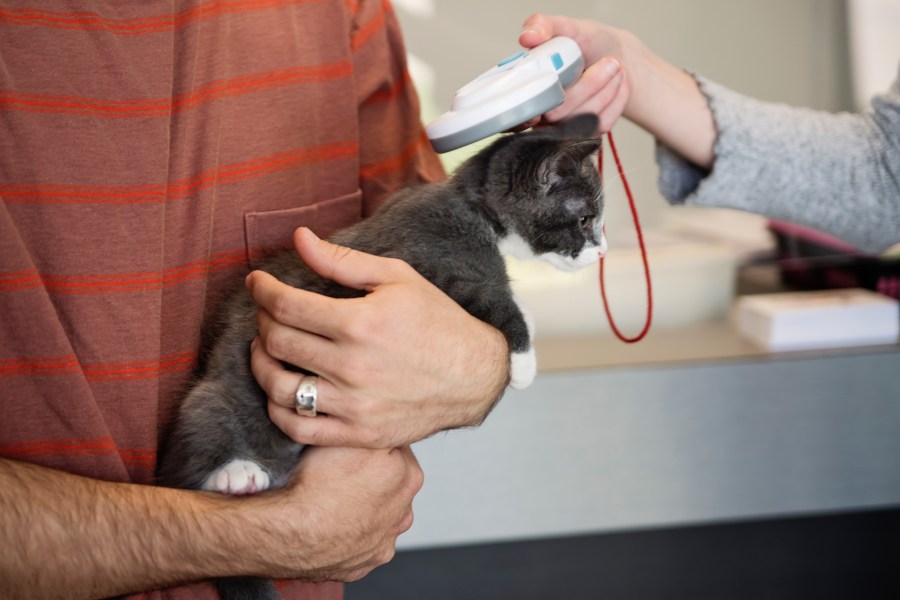
HONOLULU (KHON2) — May is National Chip Your Pet Month. It’s a time to focus on a small step that makes a big difference: microchipping your pet.
Every year, about 10 million pets are lost in the United States and many never find their way home. A simple, low-cost chip under the skin is often the only way to reunite with your furry friend if they get lost.
Here’s what every pet owner needs to know to keep their pet safe and home where they belong.
1. A microchip is tiny but powerful
About the size of a grain of rice, a microchip is a small electronic device implanted just under your pet’s skin between the shoulders. It’s not a GPS. Instead, it holds a unique ID number. When scanned at a vet clinic or shelter, that number connects to your contact information—if you’ve registered it.
The chip lasts for life and is safe for dogs and cats of all ages. It doesn’t need a battery and doesn’t hurt your pet.
2. Registering your info is free and important
Having the chip isn’t enough. You must register your name and contact details with the microchip company or through a free database. This is how someone can reach you if your pet is found.
There is no fee to register your basic contact information. Any extra charges you may see are for optional services and not the chip itself.
3. Honolulu law requires microchips for pets
Since 2020, the City and County of Honolulu has required that all dogs three months and older and all cats four months and older be microchipped. This law replaced the old dog licensing system. Unlike a collar or tag, a microchip can’t be lost or removed.
It’s a simple, one-time procedure that helps your pet stay in compliance with local rules and safe from getting stuck in a shelter.
4. You can still use a collar and tag
While microchips are a secure form of ID, they’re not visible. That’s why vets and animal experts recommend that pets, especially dogs, also wear a collar with an ID tag. This way, a friendly neighbor can return your pet without needing a chip scanner.
If your cat goes outside, the law says they must wear a collar and tag starting at six months old.
5. Where to get your pet microchipped
Microchips are available at most veterinary clinics and at animal welfare nonprofits like the Hawaiian Humane Society. The process is quick and similar to getting a vaccination. No surgery or anesthesia is needed, and your pet can go home right away.
If your pet already has a microchip but you don’t know the number, a vet or shelter can scan them to find out.
6. You can add backup contacts
If you’re traveling or just want extra peace of mind, you can list more than one contact on your pet’s microchip registration. This could be a family member, your veterinarian or your pet sitter. If something happens and you can’t be reached, someone else can speak for your pet.
This is especially helpful during holidays or natural disasters when people may be harder to reach.
7. You can transfer ownership through the chip
If you rehome your pet or adopt one from someone else, be sure to contact the chip’s manufacturer and update the owner info. Each company handles this differently, but common ones include AVID, HomeAgain and 24PetWatch.
The microchip number stays the same, but the information connected to it should reflect the pet’s new home.
8. Chips help reunite pets years later
Microchips have helped pets get home even after being lost for years. One well-known case involved a cat named George, who was reunited with his family 13 years after he disappeared. That was thanks to his microchip. His story proves just how powerful this tiny tool can be.
Most shelters and animal control officers now scan for chips as a first step when finding a lost pet.
9. Check the chip every year
Once your pet is chipped, ask your vet to scan it once a year to make sure it still works. Chips rarely fail, but it’s always good to double-check.
Also, update your contact information whenever it changes. If you move, get a new phone number or change your email address, go online and update your pet’s microchip record.
10. Chip your pet month is the perfect time to act
Use May as your reminder: Is your pet microchipped? Have you registered your contact info? Do you need to update anything? If you’ve been putting it off, now is the time.
Take your pet to the vet for a quick chip check. While you’re there, spoil them with treats, a walk or a new toy to say thanks for being your best friend.
Your pet depends on you for everything: food, shelter and love. But if something unexpected happens and they wander off, a microchip could be the only voice they have.
It’s small, inexpensive and takes just minutes to get; but it could make all the difference in keeping your family together.
Click here for more information on chipping your pet from the Hawaiian Humane Society.
This Chip Your Pet Month, do the responsible thing. Get your pet microchipped, check your registration and help spread the word. Because keeping pets safe means keeping them home.