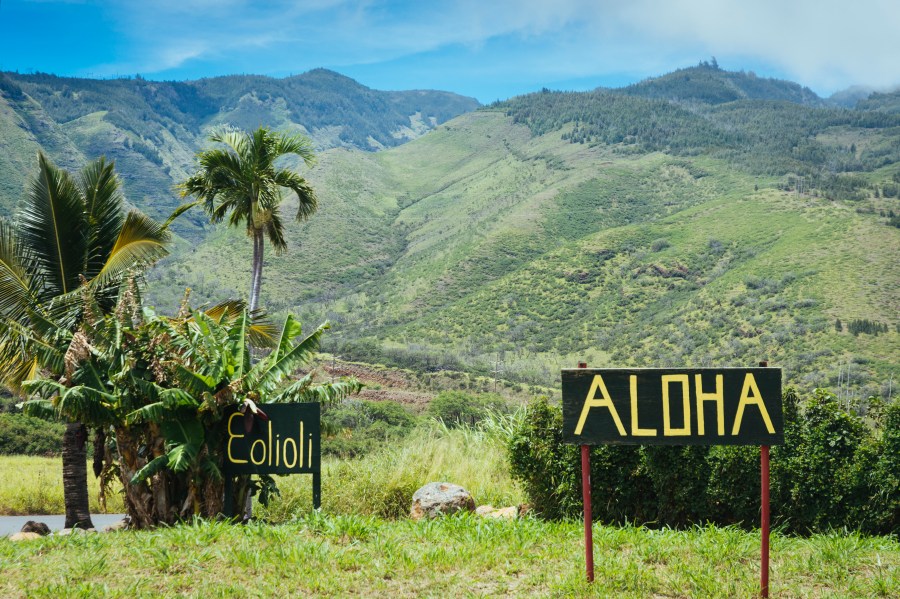
HONOLULU (KHON2) — If you’re planning a trip to Hawaiʻi, you’ll likely hear more than just the sound of crashing waves and strumming ʻukulele. You’ll hear words that carry the voice of a place older than the United States itself.
This voice, ʻŌlelo Hawaiʻi, the Native Hawaiian language, is still spoken by many; and its words live in the names of streets, businesses and even in the way locals greet each other.
Hawaiʻi is more than a vacation spot. It is a place with deep roots, living culture and a complex history. Knowing some basic ʻŌlelo Hawaiʻi terms isn’t just about sounding polite. It’s a way of showing respect to the people and land that host you.
Before you head to the islands, take time to learn and understand these important words. It might help you connect more deeply with the place you’re visiting and with the people who call it home.
Aloha is more than hello or goodbye
Most visitors learn aloha right away, but many miss its deeper meaning. Yes, aloha can mean hello or goodbye. But at its heart, it means love, compassion and a shared breath.
It’s a way of life, not just a word. You’ll hear it everywhere from store clerks to strangers passing by but try to understand it as a reminder to treat others with kindness (lokomaikaʻi) and respect (hōʻihi).
ʻĀina is more than just land
In Hawaiʻi, ʻāina refers to land but not in the way most tourists might think. It doesn’t just mean dirt or soil. It means the living earth, the place that feeds and holds people.
For Native Hawaiians, the ʻāina is sacred. It’s seen as an ancestor and provider. When you treat the land with care, by staying on marked trails or picking up your trash, you’re showing respect for this relationship. A common phrase is malāma ʻāina (take care of the land).
Mālama means take care
This word appears on signs across Hawaiʻi. Mālama ʻāina means to care for the land. Mālama i ke kai means to care for the sea. This sense of stewardship is part of life in the islands.
Visitors are asked to join in. Take only pictures. Leave only footprints. Think of mālama as a daily action, not just an idea.
Kuleana is both a right and a duty
Kuleana can be a tricky word to translate. It means responsibility, but it also means a personal sense of duty. Someone’s kuleana might be to protect a family tradition or care for a part of the land.
When you visit Hawaiʻi, your kuleana is to be thoughtful. Follow local rules. Don’t trespass. Stay aware. Being a respectful visitor is part of your kuleana.
ʻOhana goes beyond family
The word ʻohana is often translated as family; but it reaches beyond parents, siblings or cousins. ʻOhana includes friends, neighbors and even community members who support one another.
The idea is rooted in connection. It’s why you might hear someone call a close friend “my auntie” or “uncle”. That’s not just kindness. It’s part of the culture.
Kamaʻāina is not just a discount
You might see signs for a “kamaʻāina rate” at hotels or restaurants. Kamaʻāina means “child of the land”; and it’s often used to describe long-time residents, not just Native Hawaiians.
While the discounts don’t apply to visitors, the word itself reflects how deeply connected people are to where they live. Hawaiʻi isn’t just a place to visit. It’s home to many.
Mahalo needs to be used with sincerity
It means thank you. Simple enough. But in Hawaiʻi, mahalo carries weight. It’s more than just about saying thanks when someone hands you a drink. It’s about recognizing the value of what was given — time, energy or kindness.
Say it with meaning. If someone helps you, offers directions or shares something with you, let your mahalo be more than a habit.
Wai is the water that holds life
Water is essential anywhere, but in Hawaiʻi, wai is life. Freshwater sources are limited and often sacred. Many place names include wai — Waikīkī, Wailuku, Waimea, and it show how important water has always been.
Be mindful of how you use it. Don’t waste. Don’t pollute. Clean water is a resource to protect, not just enjoy.
Holoholo is the spirit of wandering
You might hear someone say they’re going holoholo. That doesn’t mean they have a plan. It means they’re going out, maybe for a drive, a walk, or even a little fishing.
The word carries a sense of wandering with joy. If you take a holoholo day during your trip, let yourself go slow. Let it be about the journey rather than just the destination or another item on your list.
Hoʻolauleʻa reminds us to celebrate
Hawaiʻi isn’t only about nature. It’s also about community and celebration. A hoʻolauleʻa is a gathering, a festival, a joyful moment.
You might stumble upon one during your visit where you experience live music, dancing, food and people enjoying each other’s company. If you do, stop and take it in. These moments reflect the heart of life in Hawaiʻi.
Ono is more than just delicious
You’ll often hear the word ono to describe food in Hawaiʻi. It means delicious, tasty or really good. But ono is more than a compliment. It reflects the deep connection between food, culture and joy in Hawaiʻi.
When someone shares a meal and says it’s ono, they’re sharing flavor, tradition, family recipes and memories of togetherness. Whether it’s poke, laulau or shave ice, ono reminds us that food is a celebration.
The Hawaiʻi Tourism Authority has a list of ʻŌlelo Hawaiʻi words to help our visitors get by and become a part of the experience.
- ʻĀina: Land, earth; especially Hawaiian ancestral land.
- Akamai: Smart, clever, intelligent.
- Aloha: Love, affection; greeting, salutation; Hello! Goodbye!
- Hale: House, building.
- Haole: A non-Native Hawaiian, especially those of Caucasian ancestry.
- Hapa: Part, half; a reference to those of mixed ancestry.
- Hoʻolauleʻa: Celebration.
- Holoholo: To travel around for enjoyment; also used as a reference for fishing.
- Honu: Turtle.
- Hula: The dance of Hawaiʻi.
- Imu: An underground oven, as often seen at lūʻau.
- Kamaʻāina: Native-born; acquainted, familiar; commonly refers to a long-time Hawaiʻi resident.
- Kāne: Plural males. Singular is kane.
- Keiki: Child.
- Koa: Warrior; a native tree with wood used to build canoes and other items.
- Kōkua: Help, aid, assistance, relief.
- Kuleana: Responsibility; privilege; a traditional land holdings of Native Hawaiians.
- Kumu: Teacher.
- Kūpuna: Grandparents, ancestors; elderly.
- Laulima: Cooperation.
- Lei: Flowers, leaves, shells or feathers that are strung and/or entwined; given as a symbol of affection.
- Lūʻau: Hawaiian feast; edible young leaves of the taro plant.
- Mahalo: Thanks, gratitude, respect.
- Māhū: Various Pacific Island cultures refer to individuals who embody both male and female traits and/or masculine and feminine characteristics. This cultural identity is historically significant and promotes acceptance of diverse gender expressions within the community. These individuals are often respected as caretakers and healers and reflects a unique understanding of gender and sex that differs from Western norms.
- Maika’i: Excellent.
- Makai: Toward the sea/ocean.
- Makana: A gift, present.
- Mālama: To take care of, preserve, protect, maintain.
- Manō: Shark.
- Mauka: Toward the mountains.
- Moana: Ocean.
- Nalu: Wave, surf.
- Nani: Beautiful, pretty.
- Nui — Big, large, great, or important.
- ʻOhana: Family, kin group, relative.
- ‘Ono: Delicious, tasty, savory; to relish, crave.
- Pali: Cliff, a steep hill or slope.
- Paniolo: Hawaiian cowboy.
- Pau: Finished, ended, all done.
- Wāhine: plural female. Singular is wahine.
- Wai: Water, usually fresh water.
Understanding is better than repeating
It’s one thing to repeat a word you hear. It’s another to take the time to learn what it means and why it matters. Many ʻŌlelo Hawaiʻi words carry stories.
They reflect values, ways of thinking and relationships to the land and people. If you mispronounce something, most locals won’t judge you. But making an effort matters.
As travel to Hawaiʻi grows and as more visitors arrive — some without understanding the place they’ve come to — the importance of cultural respect grows, too.
You can click here for a full list of words to know.
Knowing these words won’t make you local. They won’t earn you a kamaʻāina rate. But they may help you travel with more heart.
That kind of travel leaves a better mark. And that’s something worth remembering.