HONOLULU (KHON2) — The John A. Burns School of Medicine (JABSOM) at the University of Hawaiʻi trains future doctors using one of the most powerful tools in medical education: the human body.
But these aren’t just learning tools. They are silent teachers, people who chose to donate their bodies to science so that others could live better, longer lives.
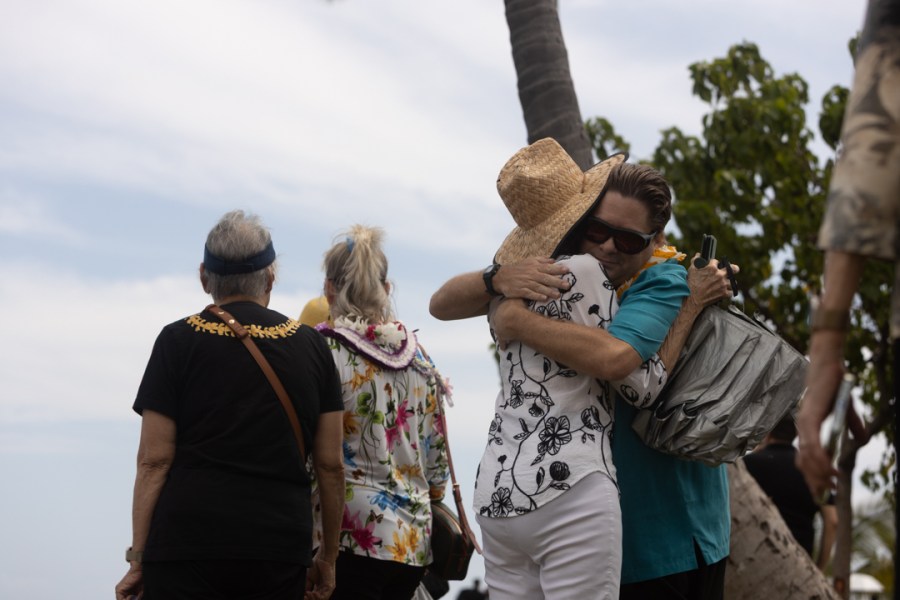
Every year, students, faculty and family members gather to honor these donors at the school’s Willed Body Ceremony. It a service that’s an act of love, recognition and gratitude. For relatives like Jed Davis, whose aunt and grandfather were both donors, the experience was personal and moving.
“You could tell a lot of care and love went into the planning and the production,” Davis said. “It was so nice to celebrate not only the silent teachers, but the families of them who are here to celebrate them as well.”
Here are the top things to know about this unique program and the powerful way it shapes both medicine and memory.
1. This program shapes how students become doctors
From their first year, JABSOM students rely on donated bodies to understand human anatomy. It’s a hands-on, immersive experience that helps them learn how organs function, how tissues are layered and what real bodies look like. It’s an integral experience that provides so much more than textbook diagrams ever can.
The experience is humbling. Students often describe their silent teachers as their first patients. They learn not only about the body, but about respect, responsibility and human connection.
2. Each donation is treated with dignity and respect
JABSOM’s Willed Body Program is built on trust. That means every donor is honored, and every family is supported. Bodies are handled with professionalism and great care.
“To know that they were honored with that choice and cared for by the students that were involved and the staff, it means the world to all of us as the family members,” Davis said. “The fact that they were cared for means everything to us.”
From the time a body is received to the final memorial ceremony, dignity is at the center of every action.
3. The annual memorial is a moment of healing and connection
Held in two parts — one at the school and the other at Magic Island — the Willed Body Ceremony is open to the public and especially meaningful to families. It includes student reflections, hula and a paddle-out where ashes are scattered in the ocean.
Davis described the day as “fitting” and full of meaning. “You could see how much it meant to the students and staff,” he said.
It’s also a rare opportunity. Most medical schools do not hold this kind of event, which allows families to meet the very students who benefited from their loved one’s final gift.
4. The program was paused, but it’s open again
In July 2023, the program had to temporarily stop accepting new donations because so many people had chosen to give. That pause has now ended, and both new enrollments and body donations are once again being accepted.
Applications are reviewed in the order they’re received. The university has asked for patience as the program handles a high volume of inquiries.
5. This is about more than death. It’s about giving life
For many families, enrolling a loved one in the Willed Body Program is a way to give back to the community. Medical students become doctors who go on to treat thousands of people over their careers. A single donation can affect countless lives.
“If you make this choice, there’s no better program to honor that choice,” Davis said. “Take full advantage of wanting to give back to the community. There really couldn’t be anything better.”
The gift is not forgotten. It’s remembered in every diagnosis made, every surgery done and every patient cared for by a JABSOM-trained doctor.
6. Students and staff take their role seriously
The team behind the program includes doctors, researchers and administrative staff who work to make sure every donor is honored properly. Students often say the experience of working with a silent teacher stays with them their whole lives.
JABSOM’s mission is about education; and through this, it’s reaching maikaʻi loa (lasting optimal health) for all. And that mission begins here, with the people who made the selfless choice to help others, even after death.
7. Every gift matters no matter how big or small
Some people might wonder if their body will really make a difference. At JABSOM, the answer is always yes. Every donor, no matter their age or condition, contributes to the future of medicine.
Whether they help a student learn how to treat cancer, perform surgery or understand the nervous system, each body plays a unique role.
8. Families find comfort in the care their loved one received
For Davis and many others, knowing that their loved ones were respected, even cherished, made the difficult decision a healing one.
“To see them treated that way,” Davis said, “and to know they made a difference, it gives us peace.”
9. You can learn more or enroll today
To find out how to register for the Willed Body Program or ask questions about the process, click here.
The program staff are available to answer questions, help with paperwork and guide you through the steps. You’ll also find contact information, frequently asked questions and more details about how the donations are used.
The Willed Body Program is more than an academic tool. It’s a bridge between generations. It’s also a reminder that teaching and learning don’t end with life. They continue, quietly, through those who give everything they have to help others grow.
As Davis put it, “It means everything to us.”