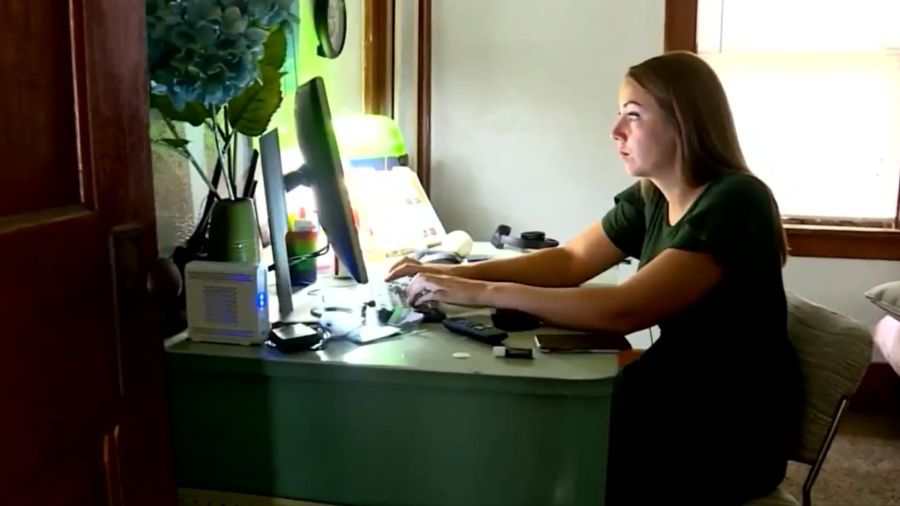
HONOLULU (KHON2) — For most of modern history, the idea of “going to work” meant going somewhere. An office. A factory. A shop. But in 2020, when the COVID-19 pandemic forced workers around the world to stay home, everything, and everyone, changed.
A new report is investigating how work from home is impacting employees and the businesses for which they work. What they found is eye opening.
Today, millions of people still work from home. They do meetings from the kitchen table. They answer emails from the couch. And employers are still figuring out what this means for business, pay and productivity.
Remote work is no longer just a pandemic solution. It’s part of everyday life for a growing part of the workforce. But that doesn’t mean it works the same for everyone or that it always works well.
Here are the top nine things to know form the report about how remote work has shifted the way we work, live, and connect. To supplement the study, we talked to a local resident who has been working from home since 2019. She made it through the pandemic with no changes to her income or job responsibilities and continues as if the pandemic never happened.
1. Remote work exploded during the pandemic
In 1965, fewer than 1 in 200 workdays in the United States were done from home. By 2019, that number was seven out of 100. But by June 2023, it had reached 28%. That’s a fourfold jump from just a few years earlier, the report found.
The shift didn’t happen overnight. It is built on decades of technological changes like the rise of broadband internet. By 2018, seven in 10 U.S. households had broadband access. That made remote work easier, faster and more reliable, just in time for a global crisis.
“I noticed a lot more people began talking about work from home during the pandemic,” said Ms. Lee. “My team that I supervise grew by about four people, which is huge in my industry.”
2. Most people still work on site
In 2023, more than half of the U.S. workforce — around 56% — still worked fully on site. About 28.6% had hybrid jobs that split time between home and office. Meanwhile, only 15.5% worked fully remote.
“While my team has remained the same since 2020, I have noticed that some of my neighbors who had adopted work from home have been being forced back into the 9 to 5 office thing.” she explained. “Most of them aren’t happy about it, but a few seem to be quite happy to be back in a more social environment.”
Smaller companies were the most likely to require full-time in-person work. Larger firms, with more resources and tools, offered more flexibility to their workers.
3. Where you live and what you do matter
In cities with dense populations, work-from-home rates were more than 40%. But in low-density areas, the rate was closer to 25%.
The type of work also matters. Jobs in information, finance and professional services often allow remote work. These industries averaged 2 to 2.6 remote workdays per week. But jobs in hospitality, food service, transportation and retail offered less than one day of remote work per week.
“My team works on service calls; so, we get callers from around the world wanting help with certain technical issues,” said Ms. Lee. “But I know my company has other departments working from home, too.”
Manufacturing jobs, which require physical presence, averaged just 0.9 remote days a week.
4. Education plays a big role in remote access
People with more education tend to have more access to remote work. Those with a high school diploma or less worked from home on 20% of paid workdays. For workers with graduate degrees, that number was 36%.
Younger workers in their 20s had the lowest remote work rates. Workers in their mid-30s had the highest. This trend reflects different needs and preferences. Younger employees often want more in-person guidance. Older workers may seek more flexibility for family and commuting.
“For me, I’m former military. So, much of my advanced skills came from the work classified work I did with the military. That opened a lot of doors for me,” she explained.
5. Working from home can mean lower pay but higher satisfaction
On average, Americans value the option to work from home two to three days per week at around 8% of their pay. That means they would take a slightly lower salary if it means skipping the commute.
“I haven’t noticed my pay decrease, but I have noticed that some of my employees are being paid less that they were five years ago,” she said. “But I chalk that up to not being able to negotiate for better pay.”
Working from home also expands the workforce. People who previously couldn’t work due to caregiving, disability or where they live may now be able to join or rejoin the labor market.
For companies, this shift has helped ease wage pressure. In 2022, the report found that 40% of executives surveyed said they expanded remote work options to help slow wage growth.
6. Productivity gains depend on the setup
Working from home saves time. Commuting, grooming and workplace distractions take up hours every week. When those go away, many workers say they get more done.
A survey cited in the report found that 43% of remote-capable workers said they were more productive at home, while only 14% said they were less productive.
Still, the full picture is more complex. In some settings, full remote work can reduce productivity. Studies in call centers and tech firms found that communication and collaboration suffered. Junior employees, in particular, struggled to learn and grow.
Hybrid work, where employees work part of the week from home and part in person, tends to offer the best of both worlds. Several studies found hybrid setups led to higher output, better work quality and stronger team performance.
“I have noticed that some of our younger remote workers have a harder time prioritizing their workflow and don’t have the same etiquette as some of our other workers,” she explained.
7. Innovation needs in-person contact
Working from home helps with daily tasks, but it may not be as helpful for innovation. In-person teams are more likely to share ideas, mentor junior staff and develop breakthroughs.
One study found that code review activity, which isa key sign of collaboration, dropped by 50% amongst junior engineers working remotely. Patent data also showed a decline in breakthrough inventions amongst remote inventor teams.
Another risk is siloed communication. Remote teams often talk mostly to others on their own team. That limits new ideas and cross-team learning.
“I can definitely see how younger employees will benefit from working in an office environment, at least more than the ones who have already had office training,” she said. “There are sometimes communications’ issues when they forget to follow-up on important deadlines.”
8. The real estate and transit picture is changing, too
As more people work from home, city centers have not fully recovered. By mid-2022, foot traffic in big cities was only 60% of pre-pandemic levels. But in small cities, traffic was nearly back to normal.
Public transit ridership also remains down. In May 2023, it was 70% of what it was in May 2019.
Meanwhile, home prices rose fastest in exurban and suburban areas. This suggests more people are choosing to live farther from urban cores if they can work remotely.
9. The future of work is still being written
Work-from-home is not just a pandemic response. It is a long-term shift that affects how people live, where they live and what they expect from their jobs. But it also brings tradeoffs.
Innovation, mentorship and workplace culture may suffer without in-person interaction. At the same time, flexibility can boost satisfaction, expand labor access and help businesses manage costs.
You can click here to read the study.
The challenge going forward is finding the right balance. What works for one team, company or city may not work for another. But one thing is clear: work will never look exactly the same as it did before 2020.