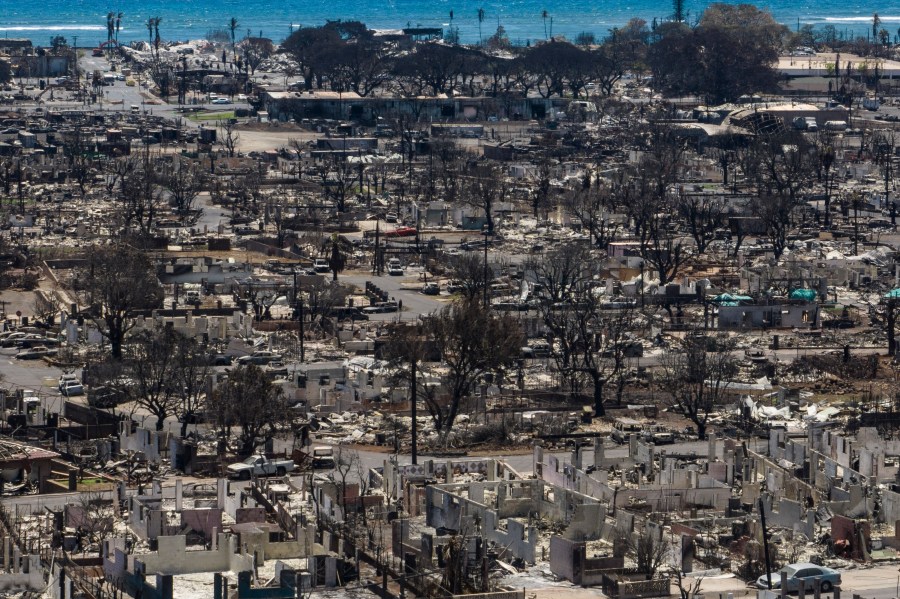
HONOLULU (KHON2) — A new study out of the University of Hawaiʻi shows some progress for Maui’s community following the 2023 wildfires; but an abundance of health and housing challenges persist, particularly for keiki and other vulnerable groups.
The university is following 2,000 adults and keiki as they conduct the Maui Wildfire Exposure Study to investigate the long-term effects of the disaster, with a variety of ups and downs coming out of the study.
According to UH, there are encouraging trends when it comes to emotional healing and healthcare insurance; but there are also persistent physical and mental health burdens, as well as an urgent need for pediatric care and more.
Health data was collected from the adults in the study, with 42% of adults reporting worse health compared to the previous year, according to UH. The study shows that half of the adults show depressive symptoms, more than a quarter report moderate-to-severe anxiety and 4.2% of adults have had suicidal thoughts in the past month.
In addition, almost three-quarters of the adults have elevated or hypertensive blood pressure and more than 25% are reporting reduced lung function.
While the percentage of uninsured individuals has gone down, access to the healthcare is another story. UH’s study said about one in three participants report difficulty scheduling appointments or receiving appropriate prescriptions, particularly for those with chronic or respiratory conditions.
While the keiki studied show signs of physical healing, their emotional well-being “raises serious red flags”. according to UH. More than half of the keiki screen positive for depression, with almost a quarter in the severe range. Thirty percent of keiki report anxiety symptoms and almost 45% show signs of PTSD, with 8% of them showing severe levels of the disorder.
Additionally, one in three children studied have elevated or high blood pressure and impaired breathing.
From an economic standpoint, the study has found that 1% of adults still live in temporary housing, with 25% of adults unemployed but actively searching for work.
The greater community also has found some strength in troubling times, with more than 60% of adults reporting high levels of support from family and friends.
With adults that have followed up with the study, experts have found meaningful signs of recovery. Over time, reports of worsened health dropped almost 12% and those who reported suicidal thoughts declined by nearly half.
There are still some consistent issues, such as widespread PTSD, as well as issues with blood pressure and lung function.
For the full report, visit UH’s website.