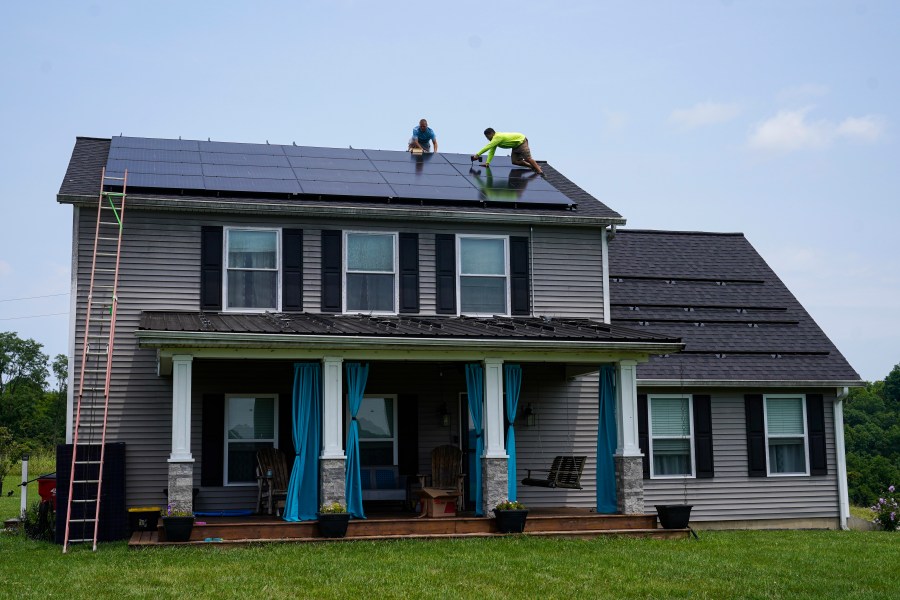
Cameron Nakashima, BBB Media Engagement & Digital Campaigns Manager joins producer/host Coralie Chun Matayoshi to discuss the advantages of going solar, scams to watch out for, how to avoid being scammed, finding a reputable licensed company, tax credits and other incentives, and ways to benefit even if you can’t purchase solar panels.
Q. Solar energy is a hot topic as pressure mounts to end federal tax credits. What are the advantages of solar and what should you look out for?
Hawaii residents face some of the highest electricity costs in the nation, making solar energy an attractive option for those looking to reduce their energy expenses. The state’s abundant sunshine and strong environmental consciousness have contributed to the rapid growth of solar power, which now accounts for over 17% of Hawaii’s energy production. In recent years, the solar market in Hawaii has become increasingly favorable for homeowners. The cost of solar systems has dropped by 4% over the past five years, while generous state and local incentives, combined with a large federal tax credit, have made solar investments more affordable and appealing than ever before. However, with all the tax credits and rebates for solar panels discussed in recent years, it can be confusing for homeowners to know what incentives available and which ones they qualify for. Scammers are taking advantage of this, presenting homeowners with offers that sound too good to be true, and misleading people into giving them thousands of dollars.
Q. What do these scams look like and how are they impacting people in Hawaii?
In these scams, someone contacts you through email, phone, social media, or even in person pretending to be a solar company salesperson. The “representative” has a special offer: they can install solar panels on your home for a very low cost – or even free. This amazing deal is only available for a limited time, so you must act now! From here, the scam can take several turns. In some versions, the scammer is after your personal information. They ask you to fill out forms with your banking details “to see if you qualify.” Other times, the “solar representative” claims you need to pay upfront costs, which they promise will be reimbursed by a (non-existent) government program. In other instances, the scammer may begin the installation of the solar panels on your home but then never return to finish the job. Or they may install the panels but do a poor job, resulting in panels that don’t work. If you reach out to the scammer to finish the job or fix the panels, they will become unreachable and disappear with your money. BBB Scam Tracker (https://www.bbb.org/scamtracker) has seen numerous reports of this kind of scam. The bad guys promise free solar or incredibly low-cost solar, then take your money, and run.
Q. How can you avoid being scammed?
Here are a few ways to protect yourself against solar scammers.
- Do your research – BBB has resourceslike “A Consumer’s Guide to Going Solar (https://www.bbb.org/article/news-releases/26112-bbb-tip-a-consumers-guide-to-going-solar). Genuine incentive programs and reputable solar energy contractors do exist. Before you accept an unsolicited offer, do some research on solar companies in your area. Investigate each company’s reputation and business practices by doing a BBB search (https://www.bbb.org/search) before signing a service contract. Ask for references from previous customers and talk with them about their experience. If you’re suspecting a scam, check the BBB Scam Tracker (https://www.bbb.org/scamtracker) to see if others are reporting the same experience.
- Don’t give in to high-pressure sales tactics – con artists want to provoke an emotional reaction that would cause you to give in to their requests without thinking it through. Take your time; know that a legitimate company won’t pressure you to act. If someone uses aggressive sales tactics on you, especially if the offer was initially unsolicited, it’s best to cut off communication immediately.
- Get competing bids – contact several solar installers if you plan on going solar and get bids from each company. If someone is pulling a con, they will be much easier to spot this way. Learn more about what to ensure is included in your home improvement contract (https://www.bbb.org/all/home-improvement/your-home-improvement-contract).
- Ask plenty of questions and consider the answers – ask questions about any aspect of a contract or proposal you don’t understand. If the company gets upset about your questions, refuses to answer them, or is vague with their answers, consider it a red flag.
Q. How can you find a reputable solar panel company, and do they need to be licensed?
In addition to doing the things we just discussed to make sure they are not a scam, you also want to make sure they are a reputable company that does good work. Ask your family, friends, colleagues, and others you trust for recommendations. Pay attention to how they communicate, and the level of customer service and knowledge provided. Also, check the agency’s Better Business Bureau listing for any complaints. Any individual or business operating as a solar installation business in the State of Hawaii, including online sellers, must have an Electrical Contractor license that is registered with the Department of Commerce and Consumer Affair’s Professional and Vocational Licensing Division. You can check if they are licensed by calling (808) 587-4272 or online at cca.hawaii.gov/businesscheck.
Q. You mentioned that these scammers, whether door-to-door or online, use high-pressure sales tactics. If you get bulldozed into signing a contract that you don’t feel good about, what options do you have after you signed?
Under Hawaii law, a buyer is entitled to a full refund if a cancellation notice is sent in writing within three business days on door-to-door or online sales. So, if you don’t feel like you understood the contract before you signed it or if you start second guessing or if you get hit with buyer’s remorse, the first thing you should do is immediately send a notice to the company you signed the contract with. Also, if you learn that you have signed a contract with an actual scammer, you can report them to the State Attorney General’s office, Department of Commerce and Consumer Affairs, Federal Trade Commission, and the Better Business Bureau’s Scam Tracker.
Q. It is no surprise that solar panels can be expensive, which is part of the reason why the “free solar panels” scam is so popular. If someone is interested in purchasing solar, how can they determine if they can afford it? What should people do to know if solar panels are the right choice for them financially?
If you don’t plan to pay for your solar system outright, look into financing. The Clean Energy States Alliance Guide (https://www.cesa.org/wp-content/uploads/Homeowners-Guide-to-Solar-Financing.pdf) can help you get familiar with your options. In fact, a study by the Solar Energy Industries Association (https://www.seia.org/research-resources/going-solar-america) found that 21 million United States homeowners live in a city where solar systems are purchased with a low-cost financing option that costs less than their current utility rates. Contact your utility company or a reputable solar installer to ask about tax credits and other incentives. A federal tax credit may be available for installing small solar energy systems (https://www.energy.gov/eere/solar/homeowners-guide-federal-tax-credit-solar-photovoltaics). Hawaii also offers energy tax credits, solar rebates, and incentives.
- Solar and Wind Energy Credit – this is a state income tax credit for 35% of your entire system expense — up to $5,000 — and it gets credited to your state income tax liability.
- City of Honolulu Real Property Tax Exemption – this is a property tax exemption that prevents your property taxes from increasing just because you install solar panels. As the name implies, this incentive is only afforded to residents in the City of Honolulu.
- Green Energy Money Saver (GEMS) Hawaii – the GEMS Hawaii program makes solar installation far more accessible to low-income households.
Q. If you can’t buy solar panels outright for your property but still want some of the benefits of solar, what are some alternatives to purchasing solar panels?
If solar panels cannot work on your property or if you cannot afford to purchase solar panels up front, there are several common alternatives worth considering:
- Shared solar (Community-Based Renewable Energy or Community Solar) – this is a monthly subscription that you purchase your way into a shared solar array in your community or on your island. Each month, your portion of its electric output shows up as a credit on your electric bill, which saves you money on energy costs.
- Leasing panels – as with most leases, is a monthly expense where you get panels added to your property but you do not own them outright. Most solar panel leases cost somewhere between $50 to $250 per month and last 20 to 25 years. When a solar lease ends, the lessee can either renew the lease, purchase the panels, or have them removed. The solar company is then responsible for restoring the property to its original condition before the lease, which can take up to a year. This includes removing the panels, racking materials, wiring, inverters, and fencing.
- Solar Power Purchase Agreement (PPA) – is a long-term contract between a property owner and a third-party developer that allows the property owner to use the third-party’s solar panels for a set period of time at an agreed upon fixed rate. Essentially, you are not paying for the solar panels, you do not own the solar panels, you do not maintain them. The third-party solar panel owner owns them and is agreeing to set them up on your property so that they can get a stream of income from your solar energy bill payments you make to them.
Q. Where can people learn more about solar panels and solar installers?
Remember that when doing your research for reputable and licensed solar installers, start with BBB.org, and check additional details with the Department of Commerce and Consumer Affairs (https://cca.hawaii.gov/rico/files/2019/08/CLB-190718-Information-for-Consumer-About-Solar.pdf). Once you find a good contractor, they should be knowledgeable and able to walk you through the solar installation process in a way that makes sense. When it comes to incentives and credits, do your own research and work with your solar installer and local utility to make sure you know how much money you can save.
To learn more about this subject, tune into this video podcast.
Disclaimer: this material is intended for informational purposes only and does not constitute legal advice. The law varies by jurisdiction and is constantly changing. For legal advice, you should consult a lawyer that can apply the appropriate law to the facts in your case.