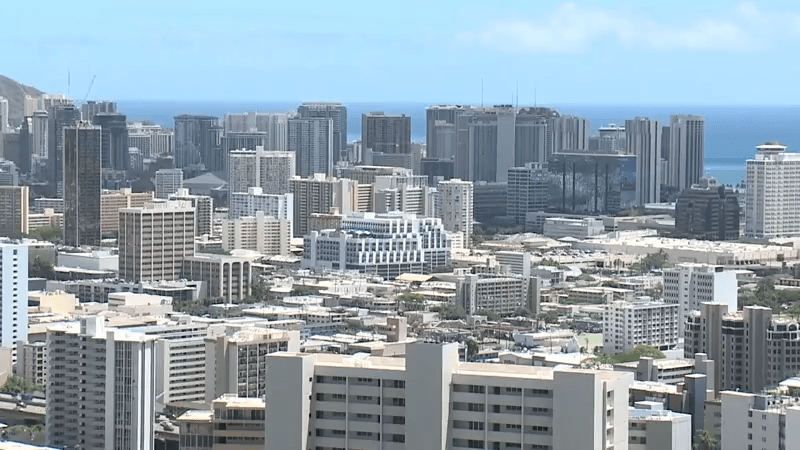
Acting State Insurance Commissioner Jerry Bump joins producer/host Coralie Chun Matayoshi to discuss why property insurance rates are so high, actions taken by the state to respond to the insurance crisis, how the Hawaii Hurricane Relief Fund and Hawaii Property Insurance Association are being used to provide insurance of last resort and condo loans for major repairs and safety upgrades, and what to do if your insurance company won’t renew your premium or rates are unaffordable.
Acting State Insurance Commissioner Jerry Bump has worked at the Department of Commerce & Consumer Affairs Insurance Division for 17 years. He previously worked with Pacific Guardian Life Insurance Company for 13 years and is a licensed Certified Public Accountant.
Q. It’s hurricane season and property insurance premiums are through the roof. What’s happening here?
Hawaii is facing a serious insurance affordability and availability crisis, especially in the property sector. Over the past 24 months, we’ve seen unprecedented premium hikes and insurer retractions. The Lahaina wildfires in 2023, causing over $3 billion in insured losses, underscored how vulnerable the state is to climate risks. Reinsurers, who provide backup coverage to insurance companies, have raised their prices globally, which makes primary insurance more expensive, particularly in catastrophe-prone areas.
Q. What’s happening to single-family homeowners?
Single-family homeowners are now increasingly affected, particularly those in higher-risk wildfire zones or coastal areas prone to hurricanes or flooding. Many are seeing premium increases of 30% to 100%, and in some cases, their existing insurers are issuing non-renewals. This has become more common as companies reassess their exposure to catastrophic events.
Q. Why are condominium associations seeing such sharp increases?
Condo associations rely on commercial property insurance policies that are directly tied to the reinsurance market. After the 2023 wildfires and other global climate disasters, the cost of reinsurance shot up. That translated into massive spikes in premiums, especially for older high-rises, with some AOAOs reporting increases of 300%, 500%, or even over 1,000%. At the peak of the crisis, approximately 400 buildings across the state couldn’t afford full replacement coverage and had to purchase partial coverage just to maintain some level of insurance. That’s a big problem because lenders like Fannie Mae and Freddie Mac require full coverage to issue or refinance mortgages. So, underinsurance is putting both property owners and the broader housing market at risk.
Q. What actions has the state taken to respond to this insurance crisis?
Governor Josh Green convened a task force made up of state agencies, industry experts, and insurers to develop both short-term fixes and long-term strategies. This included exploring resilience standards, insurance market reforms, and additional financial tools to ensure coverage remains available and affordable for both condos and single-family homes across the state. Additionally, Governor Green took executive action by issuing an emergency proclamation in August 2024, allowing the state to provide financial support directly to the Hawaii Property Insurance Association (HPIA) and the Hawaii Hurricane Relief Fund (HHRF). This helped accelerate the delivery of insurance solutions to condo associations at risk of losing coverage.
The Legislature passed Senate Bill 1044 in 2025, a comprehensive bill aimed at tackling the affordability and availability crisis. This bill did several things:
- Reactivated the HHRF to help provide insurance support for the condo market.
- Empowered HPIA to offer additional coverage options.
- Created a Condominium Loan Program, which will offer financing to buildings needing major repairs or safety upgrades, factors that also influence insurability.
- Directed the Insurance Commissioner to conduct a study for long-term reforms to stabilize the property insurance market in Hawaii.
Q. Can you explain what the Hawaii Hurricane Relief Fund (HHRF) is and how it helps?
The HHRF was created after Hurricane Iniki in 1992 to provide hurricane coverage when insurers exited the market. It collected insurance premiums from policyholders and built up a reserve of about $170 million. After the private market stabilized, the fund went dormant. SB1044 revived the fund and allowed it to partner with reinsurance markets to offer additional hurricane insurance, especially for condo associations that are having a difficult time obtaining 100% of their insurance coverage. The idea is to use public funds strategically to backstop the private market, not replace it, and keep the property market functional.
Q. What are homeowners and condo associations encouraged to do if they face a non-renewal or unaffordable premiums?
First, don’t panic, but don’t wait until the last minute either. If you receive a non-renewal notice:
- Immediately contact your insurance agent. They have access to a wider array of Hawaii licensed carriers and may be able to place you with surplus lines carriers or find coverage through programs like the Hawaii Property Insurance Association, which serves as a market of last resort.
- For condos, consult your association’s risk manager or insurance broker. Some may be able to access coverage through HPIA or via new options supported by the HHRF.
- Review your home or building’s risk factors, such as older plumbing and electrical systems, poor roof conditions, and lack of fire breaks or fire suppression systems. These are all red flags to insurers. Upgrading or performing deferred maintenance may provide better insurance options in the future.
Q. Looking ahead, what trends should we expect in Hawaii’s property insurance market over the next year or two?
A few things to watch:
- Insurance availability will remain tight in high-risk areas, but legislation and public-private partnerships like HHRF may stabilize the worst of the disruption.
- Premiums will likely stay high, but more predictable, especially if we avoid another catastrophe in 2025.
- Climate resilience will matter. Properties that invest in wildfire protection, hurricane-resistant roofs, and updated systems may be better positioned to secure coverage.
- Expect regulatory activity. The state may explore further interventions if access doesn’t improve such as creating public insurers or new risk transfer mechanisms.
Q. What’s the broader takeaway for consumers and policymakers in Hawaii?
The insurance crisis is a symptom of a larger issue: climate risk is here, and it’s expensive. The challenge now is finding ways to spread that cost in a way that keeps the housing market stable and insurance accessible. SB1044 and the reactivation of HHRF are important tools, but they’re not the full solution to a complicated problem.
Hawaii’s property insurance market is evolving quickly. Whether you’re a homeowner or part of a condo association, it’s important to stay informed, act early, and take advantage of new tools like the revived Hurricane Relief Fund. While the road ahead may be unstable, collaboration between government, insurers, and property owners can help build a more resilient and insurable future for our communities.
To learn more about this subject, tune into this video podcast.
Disclaimer: this material is intended for informational purposes only and does not constitute legal advice. The law varies by jurisdiction and is constantly changing. For legal advice, you should consult a lawyer that can apply the appropriate law to the facts in your case.