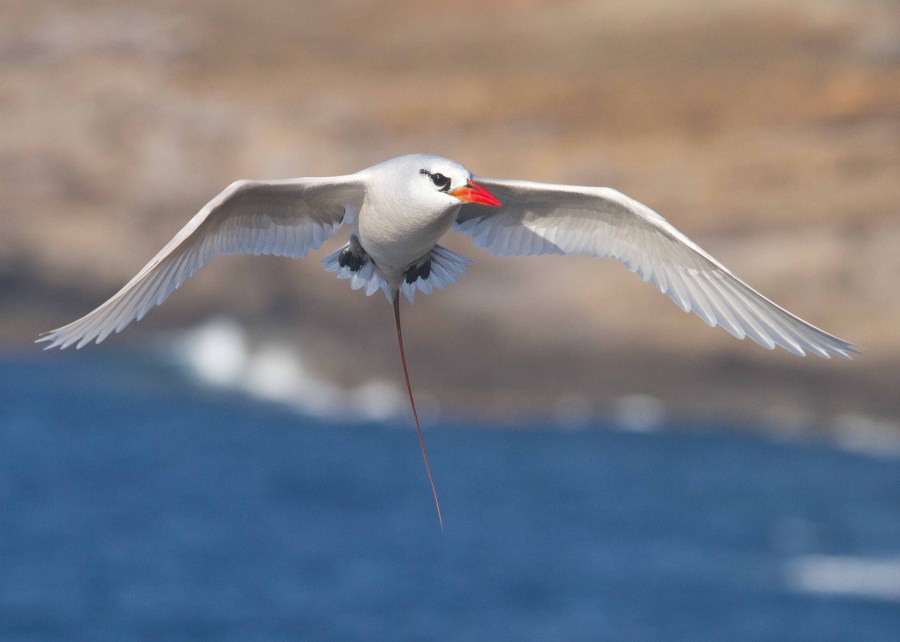
HONOLULU (KHON2) — On Saturday, Pacific Rim Conservation executive director Dr. Eric VanderWerf found 21 native birds dead near Halona on Oahu’s East shore.
He has been monitoring the colony of koa’e’ula or red-trailed tropic birds here for 20 years.
“And the colony has been growing; generally, it’s been doing well,” he said. “This is the only area on Oahu where they nest is along this section of coastline.”
But he made a gruesome discovery when checking the nests over the weekend. “Six adults and 15 chicks had been killed by feral cats,” he said.
He said two years ago, a feral cat feeding colony popped up at Lanai Lookout. On Sunday, there were multiple bowls and plates in the bushes where people leave food for the cats.
Dr. VanderWerf is a cat owner himself, but can’t understand why people are feeding cats in that area when they have to cross busy Kalanianaole Highway to get food. In the last few months, he’s seen multiple dead cats on the side of the road that were hit by cars.
Unfortunately, he said he started finding dead native chicks around the same time the cat colony appeared.
“This is not a safe place for them to be, I’m not anti-cat, I want to see them cared for better, but this is just not a good place for them to be, and this is the only place on the island where koa’e’ula are nesting right now and it would be nice to protect them a little bit better,” Dr. VanderWerf added.
He said there are mongoose in the area and admits they might take chicks occasionally, but they aren’t strong enough to kill the adult birds.
“They’re strong birds, they have a sharp beak and they can defend themselves, and they also screech loudly when something comes too close to them, and the screech alone might be enough to deter some predators like mongoose and rats,” he explained. “But cats are stronger and, in the end, more aggressive.”
According to DLNR’s website, koa’e’ula pairs remain together for years. On Saturday, VanderWerf found a dead adult bird in his nest by itself. On Sunday, when he took KHON2 to the spot, the other pair returned and was sitting by its side.
“I think it’s important the cats no longer be fed here,” he said. “If they’re not attracted here then some will go away and we can trap the remaining cats humanely and take them to the Humane Society or a shelter and that’s much more humane for them than here anyways.”
Currently, Hawaii County is looking at banning the feeding of cats at county parks due to the risk of toxoplasmosis in native birds, mammals and humans too. It passed first reading last week, but a new amendment was added that would allow certified cat caretakers to continue caring for cats under an ongoing two-year pilot program.
“These certified cat colony feeders are being certified by a cat organization, not the county,” explained Joran Lerma, Nene Research and Conservation executive director, who supported Bill 51, but doesn’t agree with the new amendment. “Even though the county has a little bit of oversight, the director of animal control basically said, we’re giving the autonomy to the cat group to basically certify these people. So if the cat organization just goes and certifies everybody, then Bill 51 is basically useless.”
The bill was introduced by Council Member Matt Kanealiʻi-Kleinfelder, who was not present during the meeting last week due to a family emergency, but the Bill will be heard again on August 6.
Halona and Lanai Lookout fall under city jurisdiction. It’s already illegal to feed cats at state-owned harbors.
According to the city’s website, it has partnered with the Humane Society to control free-roaming cats with feral kitten adoption, a trap-neuter-return and manage program. Dr. VanderWerf hopes something more can be done soon in that area.
Back on Hawaii island, Bill 51 brought hours of testimony, mostly from people opposing the ban on cat-feeding.
“We often get a lot of hate towards us for bringing up the protections to native species,” Lerma said. “These groups often say they’re spending their own time, money, their own manpower doing these things, and for us in conservation, it’s the same way. I don’t get paid for any of this [nene conservation], it’s all coming out of my own pocket.”
He said his family has received harassing messages from many who want to continue feeding the cats.
Check out more news from around Hawaii
“It takes a toll on all of us trying to do what we can to protect native species, and to me it’s worth it because I want my kids to experience what I did as a kid, being able to go to these fishing spots in Hilo and actually catch a fish, go out and see native species and their native habitats, so we’ll fight on.”