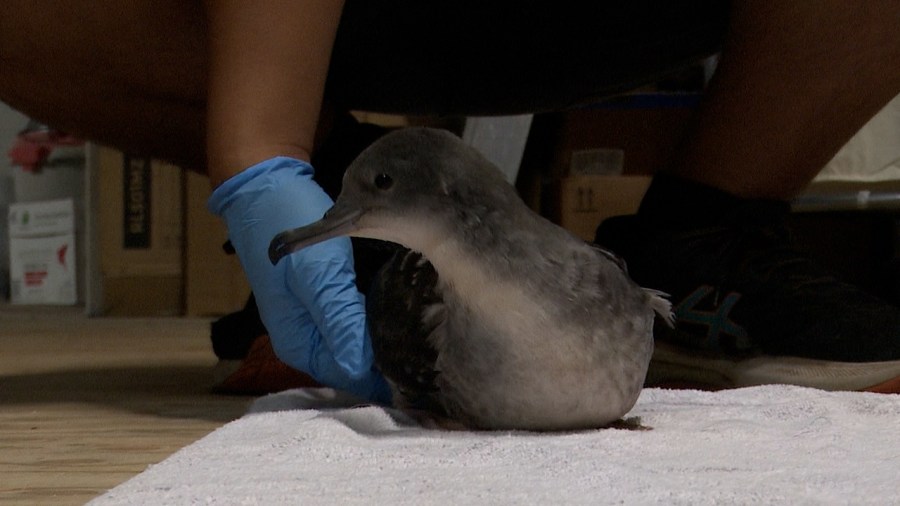
KANEOHE, Hawaii (KHON2) — Rescue centers are reporting unusually high numbers of disoriented native shearwaters crashing into the ground.
The peak fallout season has not started yet, but experts say keeping your lights out could save lives.
The medical director of Feather & Fur said they have had 98 shearwaters brought into their animal hospital in recent days — earlier than the usual peak fallout season in mid-November.
“For the last number of years, we’ve been getting anywhere from 500 to 700 birds each year, with a peak of about 100 birds a day for our peak days on our busiest time of year. This year has had a busy start,” Dr. Brian Walsh said.
The shearwaters are juveniles who usually just took flight for the first time.
“And what they do is they go to the lights, which is supposed to be the stars and the moon over the ocean, and instead they get confused by city lights,” Dr. Walsh said. “Sometimes they hit something and they crash, and sometimes they just get confused and they just land, and then they don’t know where to go.”
“Once they ground and they can’t get back up, they can starve. They can get hit by vehicles, they can get attacked by predators, and they can get infections as well. It’s pretty common for birds that ground,” said Save Our Shearwaters program manager Jacqueline Nelson.
There are ways to help prevent fallout from home.
“So, if you have a lanai, especially or some windows that are facing toward the mountains on Kauai or toward the ocean, turning off your lights or closing your curtains if you need to keep your lights on,” Nelson said. “Keep a close eye, look underneath your vehicles before you drive, especially if you are kind of nearer to a colony that you’re aware of.”
There is a drop-off tent at Feather & Fur that will be open from 7 a.m. to 7 p.m. through November, where folks can bring in downed shearwaters during the day — the intake desk at the Animal Hospital is also open 24/7.
“We just need people to wrap them up in a little towel, put them in a box and bring them to us so we can assess them for possible release,” Dr. Walsh said. “These birds are not a threat. They’re not aggressive. They’re just a little scared and a little confused. And so they just need someone to kind of wrap them up in a box and bring them in.”
Dr. Walsh said the success rate for releasing rehabilitated shearwaters is about 95% — fallout can happen statewide, but is more common on Oahu. Click here for more information.