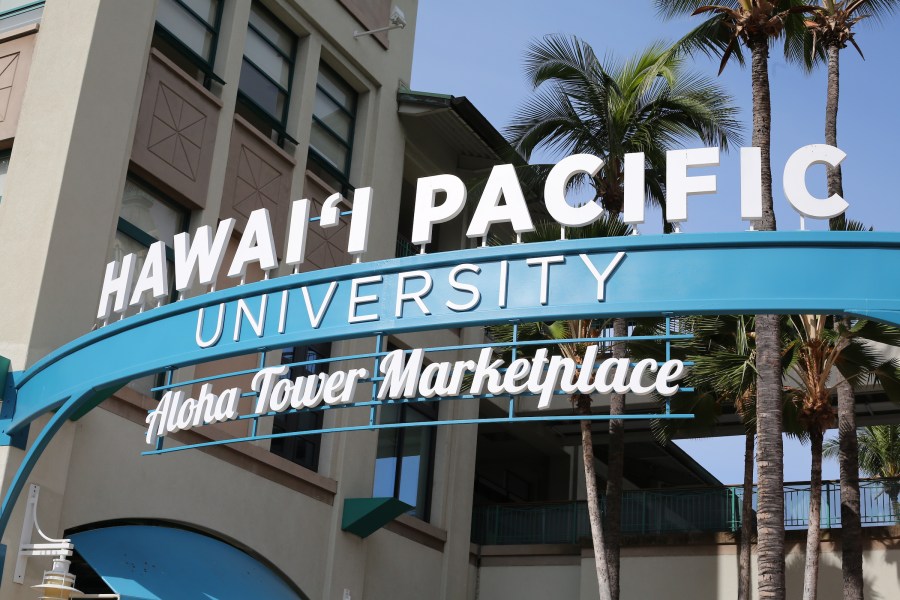
HONOLULU (KHON2) — The Center for Marine Debris Research (CMDR) at HPU has launched the state’s first Plastic Recycling Research Facility. The goal of the new facility is to get marine debris out of the ocean and transformed into life-long infrastructure products.
The initiative of this project is to ease environmental damage while creating products to transform local infrastructure, including prioritizing these products for use in affordable housing projects.
In June 2024, the operations were relocated to a warehouse in Kalihi. Since then, over 227,000 pounds of marine debris have been collected.
Fishing gear is most commonly found among the trash, such as ghost nets and floats.

“These plastics drift from across the Pacific, accumulating in the North Pacific Gyre and eventually snagging on Hawai‘i’s fragile coral reefs before washing up on the shores,” said HPU Environmental Scientist and CMDR Megaplastic Program Director Mafalda de Freitas, M.Sc. “No Hawaii-based fishermen use the type of trawl nets we find; this debris is overwhelmingly foreign, underscoring the global nature of this issue.”
Partner sites are participating island-wide in the collection of debris, most of it coming from the North Pacific Garbage Patch.
Multiple times a year, the litter collected at the partner sites is transported to the CMDR warehouse. HPU students and other volunteers carefully sort through the litter by type and polymer.

“We’re turning a major environmental problem into a tangible solution,” explained de Freitas. “Our goal is to produce products locally, sustainably, and durably, enhancing our community’s resilience and self-sufficiency, especially when it comes to building housing.”
CMDR has collaborated with a recycling facility in Nebraska to experiment creating 100% recycled plastic lumber from fishing nets. This lumber can be used for a variety of projects, which can reduce the reliance on imported materials.
“We want to continually experiment with new product formulations,” said de Freitas, mentioning future test ideas include combining recycled plastics with natural materials. “Every successful product brings us one step closer to a circular economy.”

CMDR has also worked with multiple organizations on H-POWER, a way to incinerate the debris that cannot be recycled into energy for the City and County of Honolulu.
Check out more news from around Hawaii
“One issue we are facing right now at our current location is the need for additional space,” de Freitas shared. “If we can find a bigger location on the harbor, we can accept more plastics, get heavy lifting machinery that will help us work even faster and harder to help create a sustainable, renewable solution to the marine debris crisis in Hawai‘i. If anyone out there can help, please reach out!”
For more information on HPU’s efforts and other CMDR projects check out the website.