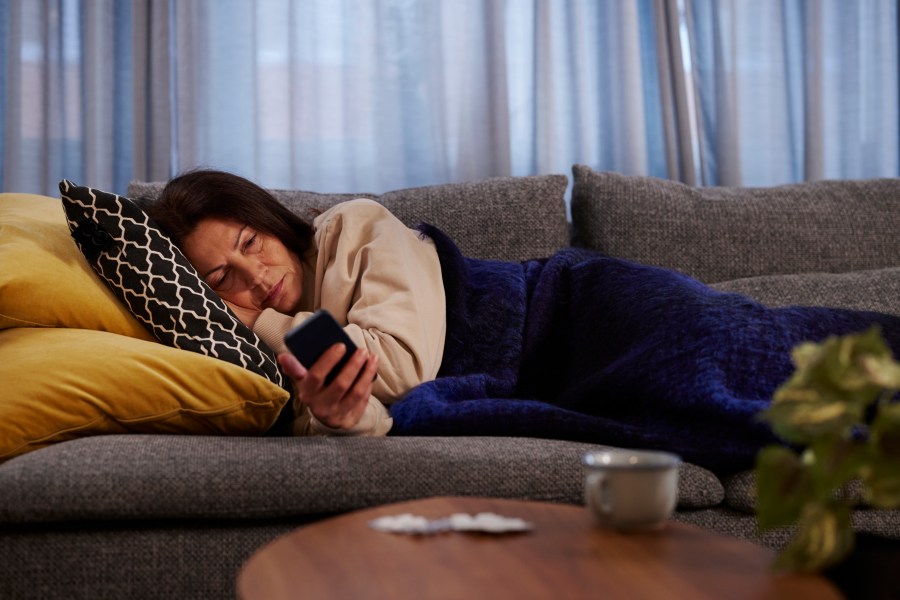
HONOLULU (KHON2) — Half of all adults in the United States report measurable levels of loneliness. The report from the U.S. Surgeon General said the health effects was serious and raises the risk of heart disease, stroke, dementia and even early death.
The risk of dying early is about 29% higher for people who are socially disconnected. That’s the same as smoking 15 cigarettes a day, according to the report.
Haylin Dennison, LCSW, executive director for Spill The Tea Café in Honolulu, said the pain of loneliness is showing up every day in the young people she works with.
“I work with med students, and I actually work for Hawaii residency program,” Dennison said. “Even there, [it’s] like the Surgeon General put out an entire campaign about this loneliness epidemic and how it’s like killing people the same way cigarettes did.”
But this problem didn’t begin with the pandemic, she said. And it isn’t going away on its own.
Choosing comfort over connection
Dennison said loneliness is made worse by how people choose to connect, or not connect, with each other.
“It’s hard for us to take accountability, that some of the reason that we’re lonely is because of our choices,” Dennison said. “Because it’s easier to stay home.”
Dennison remembers a time when kids had no choice but to go outside and make friends. Now, kids and adults alike can stay home and be endlessly entertained by a feed filled with content they already like.
“Instead of, like, dealing with a human who is not going to always agree with you,” Dennison said. “many are choosing to avoid conflict.”
Connections take effort and energy
The Surgeon General’s report said connection happens not just in families and friendships but in schools, jobs, neighborhoods and digital spaces. But building those bonds takes work, and it can be draining.
“There is no health without mental health,” Dennison said. “Like, if you connect with another human to try to avoid that or prevent the loneliness, it might feel draining. You might be so tired from work, but at the same time you know that after that interaction you feel better.”
She said Hawaiʻi culture still prioritizes aloha and ʻohana. But even that foundation can’t cancel out high living costs and packed schedules that tend to encroach on our mental health.
“It’s so expensive to live here that we still feel disconnected,” Dennison said. “And that doesn’t necessarily mean that we are sharing our struggles, which is a key component of feeling not alone in life and having a ‘tribe’ to support you.”
Youth need in-person spaces to belong
Dennison helped open Spill The Tea Café as a direct response to youth isolation. The nonprofit offers a physical space in Honolulu where teens can hang out, make art, sip boba and just talk.
“It’s an actual in-real-life space where kids can come together and not feel alone,” Dennison explained. “So, there’s group therapy; but there’s also nonclinical things like an art night or a boba night.”
The small things matter
Dennison said everyday acts of connection, especially when they feel inconvenient, can still hold value.
“Even just going to your kid’s football game or, you know, doing the things that we want to make sure we’re actually seeing the value in that and not just kind of like minimizing it,” Dennison said.
She believes people shouldn’t wait for others to make the first move.
“If we see others who might be struggling… take the risk and reach out,” Dennison said. “Hey, I’m just checking in; send a text [to say] ‘hey’, send a meal or anything.”
Mental health is your kuleana
Dennison said culture, fear and stigma still make people hesitate to talk about what they’re going through.
“We are coming around; and we’re, you know, stigmatizing it less,” she said. “But it still is a big issue, especially in Hawaii with our Asian influence to save face and keep everything in.”
You can click here to read the 2024 Surgeon General’s report. You can click here to learn more about Spill The Tea Cafe.
Dennison’s message is simple.
“Our mental health is our responsibility,” Dennison said. “Despite anything that’s happened to us in the past.”