United States Senator Brian Schatz joins producer/host Coralie Chun Matayoshi to discuss what we have seen so far from the Trump administration, how these actions specifically impact Hawaii, whether the new administration is doing anything to bring down energy costs, the future of energy tax credits, grants, and loans, and areas where bipartisan progress can be made, and future funding for FEMA and climate mitigation infrastructure measures.
U.S. Senator Brian Schatz previously served in the State House of Representatives and as Lieutenant Governor for the State of Hawaii. He currently chairs the Indian Affairs Committee, and serves on the Appropriations, Commerce, Science &Transportation, and Foreign Relations Committee, and Select Committee on Ethics. He also serves as Deputy Conference Secretary and Chief Deputy Whip. Throughout his career, climate change has been a top priority for Senator Schatz. He has introduced legislation and brought key players together at the state and federal level, including spearheading the Hawaii Clean Energy Initiative and Chairing the Senate Democratic Special Committee on the Climate Crisis.
Q. What are the changes to energy and climate policy that you’ve seen so far with this administration?
I think there are two ways to look at it. One is that obviously Donald Trump is trying to do as much damage to climate action as he possibly can, especially in the international context. The difficulty is that people do really follow the United States. I think the thing that has changed over the last 6 months that I’ve never seen before is that other countries are starting to realize that we’re not a reliable partner anymore as it relates to climate action. So they’re just moving without us. And that’s a missed opportunity. Because China, the EU, Africa, South America, the rest of North America. They’re all moving forward with climate action without us.
The good news is that the foundational climate bill that we passed in the last administration is still intact and is still driving a record amount of clean energy growth across the country. And that doesn’t look like it’s stopping. With climate, it’s true that we’re doing more than we’ve ever done, but it’s also true that it’s never quite enough. And so that’s the way to understand this, which is the foundational clean energy tax incentives are still on the books, still driving innovation, and still helping investors in Hawaii to help us to reach our clean energy goals. But Donald Trump is trying to ruin it all. He just hasn’t been able to get to it all yet, and I think we’re going to be able to succeed in making sure that the line continues to point upwards as it relates to hitting our climate goals. Are we going fast enough? No. But can one man stop our clean energy progress? Probably not.
Q. How are these actions specifically impacting Hawaii?
I think the challenge for Hawaii is on the grant side. There were a bunch of grants that were essentially canceled. And that’s a real problem for a lot of the organizations that were about to do excellent work. The Trump administration was just ordered to comply and start pushing money out. And it’ll be an interesting test because the organizations that are eligible to receive these dollars have received not the money yet but rather the notification from the administration that there was this court order. I think the money is going to start to flow again. But with this administration, you never know.
We should not obey in advance. Just because Donald Trump declares something by executive order does not make it a fact; does not make it a law; does not make it a contractual obligation. A lot of the recipients of grant funding have binding contracts with the federal government, and it’s a question of enforcing them. And so for some organizations it’s so hard because you end up experiencing cash flow pinches, and all that uncertainty can make it really difficult to even survive. But I do think we’re going to win in the end. It’s just going to be a very painful process along the way.
Q. As far as energy costs, is the administration doing anything to bring those costs down?
No, they’re really not. And obviously the tariffs, there’s an exemption for imported fuel. But a lot of the inputs in energy production, transmission, distribution, they’re imported products. They’re an imported supply chain. So the cost of everything going up is going to drive up the cost of electrons for everybody. And so that’s a challenge.
The old disagreement was, ‘Should we do clean energy?’ Or ‘Should we do all of the above?’ Clean and fossil, and make a transition over time. They’re not really for all-of-the-above anymore. They’re canceling wind contracts. And this is mostly on the continent, but they’re canceling wind contracts where the price per kilowatt is cheaper than fossil energy.
The idea is abundant energy, and that’s compelling to a lot of voters. What they don’t realize is they’re not creating abundance. They’re actually favoring an industry that is basically, no matter what Trump does, coal is not going to survive another couple of decades. They’re trying to squeeze another couple of years of viability out of coal just to keep these guys more profitable. But it actually ends up hurting consumers. So, the answer to the question is, no, they’re absolutely not doing anything to alleviate people’s pain at the pump or when they pay their utility bill.
Q. What do you think is the future of the act’s tax credits and grants and loans?
I think the grants are the ones that are most vulnerable because most of those grant agreements allow the government to basically cancel at any time. And so in those instances, unless there’s an expenditure already made, and you’re owed the money, the government has a pretty good case to just go ahead and cancel it.
Loan programs are pretty well intact. And then the tax incentive structure, I’ve been working very hard on making sure there’s enough bipartisan support, so that when the Republicans try to cut taxes and they need to find some revenue stream to make up for all the money that they’re forfeiting through their tax cuts, that there’s enough Republicans saying, ‘Hey, I’ll vote for these Trump tax cuts, but not if it includes eliminating the foundational clean energy tax cuts.’ We actually got 4 Republicans to sign a letter saying they oppose eliminating the clean energy tax credits on the Senate side.
Four is just enough to stop them. Three would be not enough. Four is enough, and there are 12 House members who signed a similar letter. Now, whether they will be able to withstand pressure from Donald John Trump, when he calls, remains to be seen. But still there’s a good growing bipartisan consensus. On the mainland, there’s more clean energy growth in red states than in blue states. It’s Oklahoma. It’s the Dakotas. It’s Texas. It’s Florida. Iowa. A lot of pretty Republican areas are actually benefiting tremendously from the Inflation Reduction Act. And that creates some kind of weird, funky politics. I’m working with people with whom I don’t agree on a lot. But we do agree on how much of a boon wind and solar have been for consumers and businesses.
Q. Are there areas where you think bipartisan progress can be made?
Yeah. First of all, it’s stabilizing these incentives and keeping them on the books. That’s the main thing. The second part of this is we just make it too hard to build anything. And frankly in Hawaii, I think that goes for housing and clean energy. I’m a progressive, and so I want for us to have enough abundant clean energy and enough abundant housing, so that we can build the future that we all say we want. And yet it is our own government rules that make it almost impossible to build clean energy or build housing. And so Republicans want to work with us on permitting reform. And there are a number of pretty reasonable proposals that would accelerate, especially wind and solar, projects across the country.
Will this happen? I don’t know. Politics is weird sometimes, but that’s probably the most fruitful area for bipartisan work. And I think on the geothermal energy side, there are a lot of really high potential areas. Again, in states like Idaho and places like that, where they’ve got the potential to power their entire state with abundant clean energy. And even though it’s clean energy, they want to do it. In spite of it being good for environment, they want to do it anyway. And so there are some opportunities for us to work together. But just to be totally blunt: we have to wait for the lawbreaking to stop before we start the lawmaking in these areas. But I do believe that sometime this summer we’ll be able to work together on a bipartisan basis.
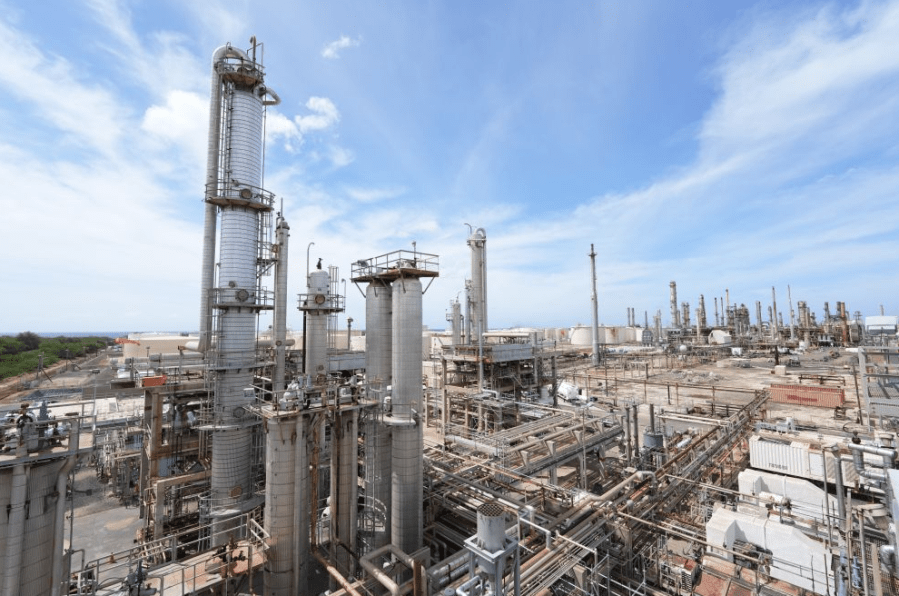
Q. How will cuts to FEMA and federal funding of climate mitigation measures affect Hawaii as we anticipate more frequent disasters, catastrophic ones, and try to combat sea level rise like moving highways and oil refineries in Hawaii away from the shorelines? Is there going to be Federal funding for that?
Yeah, there will be. There will continue to be federal funding for infrastructure. And the bipartisan infrastructure bill that we passed a couple of years ago – it takes so long to do permitting. But now, 3 odd years later, we’re finally actually seeing some of these projects break ground. So I’m confident that those will still happen. And I’m also confident that when the rubber hits the road and we get to the point where we’re actually doing an appropriations bill, we’re not going to cut FEMA. Mark my words, FEMA has broad bipartisan support. Disasters hit small towns everywhere. Blue, red, purple, non-voter – doesn’t matter. Rural neighborhoods are the ones that get smacked the worst with these kinds of disasters because they are least able to respond. They don’t have big emergency operating centers or fire departments or EMS crews. And so, they just need help from wherever they can get it. It’s a crazy thing to propose. But I’m a little less worried about FEMA cuts than other things.
To learn more about this subject, tune into this video podcast.
Disclaimer: this material is intended for informational purposes only and does not constitute legal advice. The law varies by jurisdiction and is constantly changing. For legal advice, you should consult a lawyer that can apply the appropriate law to the facts in your case.