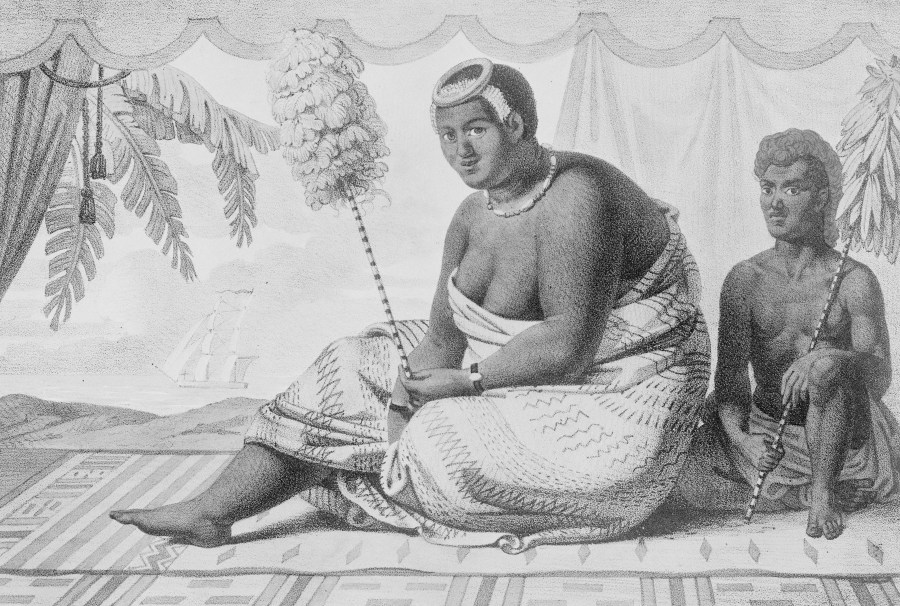
HONOLULU (KHON2) — In the ahupuaʻa of Waiau, which lies in the moku of ʻEwa here on Oʻahu, stands a roadway named in honor of King Kamehameha’s favorite wife. We are speaking of Kaʻahumanu St.
Born to chiefly parents in Hāna, Maui, Kaʻahumanu grew up to become one of the most powerful of her time.
She was taken by Kamehameha as his wife in 1785 prior to his unification of the Hawaiian Islands.
Her father, Keʻeaumoku, stated to the future King that the only person strong enough to rebel against him was Kaʻahumanu.
Because of this fear, Kamehameha had declared a law that any man who were to sleep with her would be killed.
Following the King’s death, Queen Kaʻahumanu became the first Kuhina Nui, or co-ruler of the Hawaiian Kingdom.
The Kaʻahumanu Street of today is not the first as many of the earliest Honolulu streets are no longer.
Can you imagine where I now stand used to be the intersection of Merchant and Kaʻahumanu Streets once upon a time?
What was the center of Honolulu’s business district during the monarchy? Kaʻahumanu Street played a significant role.
Known previously as Beef Lane or Kaukau Lane, native markets line the street along with shipping trade merchants.
Hawaiians called it Pipi kaula, meaning “jerked beef,” Naʻau puaʻa, meaning “pig intestines,” and Naʻau kakemeaning “sausage.”
It wasn’t until August 30, 1850, when the name Kaʻahumanu was chosen by the Privy Council.
It was then that a total of thirty-five streets received their official names.
Check out more news from around Hawaii
Nearly half remain.
Did you know? Now you do!