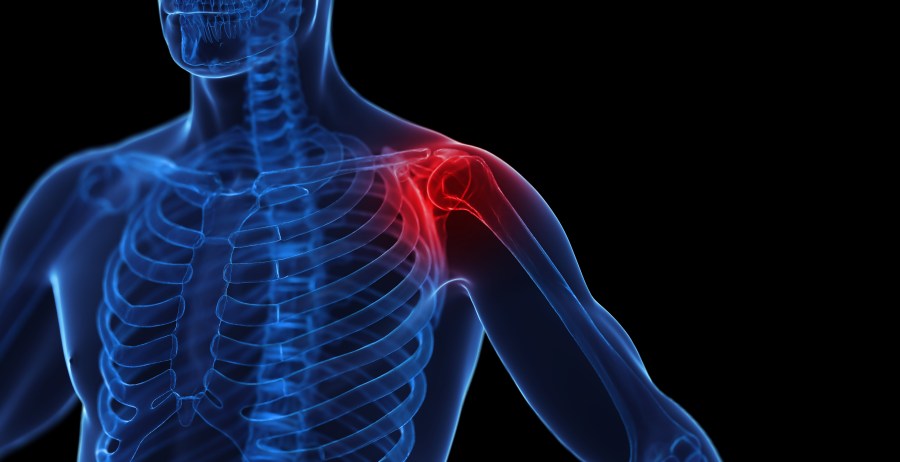
HONOLULU (KHON2) — People who enjoy swimming or playing certain sports such as baseball and tennis have an increased risk of injuring their rotator cuff.
Dr. Will Van der Reis, orthopedic surgery and sports medicine physician at the Queen’s Medical Center-West O’ahu explained that the rotator cuff consists of two big groups of muscles in the shoulder. The deltoid and the pec are in the front.
“Then there are four little muscles and tendons, and those help you do things up overhead. And there’s one on the front, one on the top, two in the back of the shoulder. The one on top, called the supraspinatus is the one that is most often injured,” said Dr. Van der Reis.
There are several ways people injure their rotator cuff.
“Sometimes there’s a traumatic event. You fall, you drop something heavy and then suddenly you can’t raise your arm up. The more typical case is that someone just has a wear and tear problem with the shoulder, and they start to have pain when they reach overhead, pain when they sleep on their side, pain when they reach behind their back. They have what you call mechanical symptoms, meaning that if you lift your arm, you start to feel a popping sensation,” said Dr. Van der Reis.
Treatment depends on whether the rotator cuff is fully torn, partially torn or just inflamed.
“If it’s inflamed or partially torn, we try anti-inflammatories like Ibuprofen. We do physical therapy where they work to strengthen all muscles around the shoulder. Sometimes we do injections of cortisone, which is an anti-inflammatory,” Dr. Van der Reis added.
“If all those measures fail or if it’s fully torn, we do surgery. We make little, tiny holes, and do something called arthroscopic surgery, where we put a camera inside the shoulder, we clean out all the inflammation, and then kind of like pulling all the bedsheets in the bed, we take the edge of the tendon, bring it back over to the bone and then stitch it down.”
After surgery, patients support their recovery with physical therapy.
Check out more news from around Hawaii
“And it could take up to six months to recover, but the good news is most people are so much better off afterwards. They have better strength, they have better function, they can get back to their work – their lifestyle activities, their families and it doesn’t bother them anymore,” said Dr. Van der Reis.
To learn more about the services provided by Queen’s West Orthopedic Center, call (808) 691-3520.