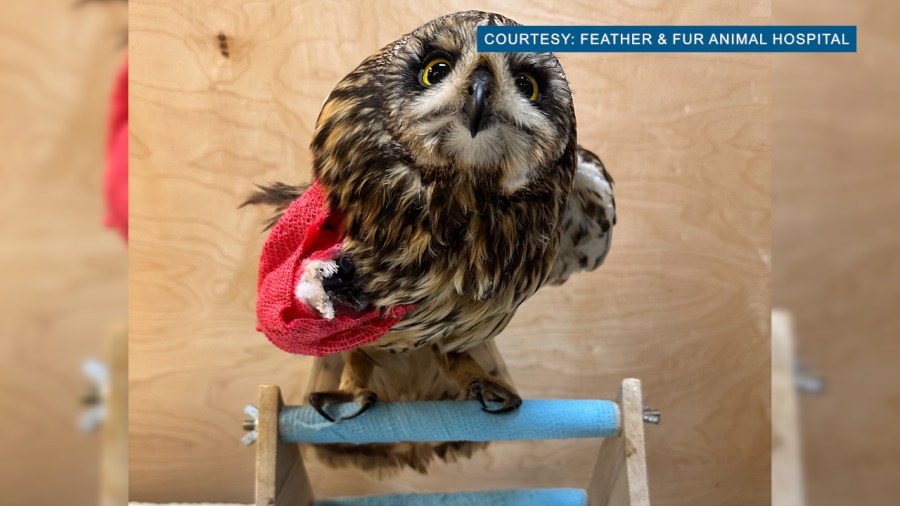
KAILUA, Hawaii (KHON2) — An injured pueo that was found in Windward Oahu is getting a second chance at flight thanks to cutting-edge tech.
KHON2 found out how a team of veterinarians used a 3-D printer to help the bird heal and why the breakthrough could change the game.
It is a groundbreaking first in Hawaii: A 3-D printed external fixator was used to stabilize broken bones in the wings of a pueo.
The bird had several broken bones and was brought in after being found in a backyard from a home in Windward Oahu. Traditional metal fixators are often too heavy for avian species, but this lightweight 3-D model changed everything.
“And so that allowed for the pins that are driven through the bone. They were clamped down on each side, and that provides, it’s a stable structure for the bone to be well aligned and then to re-heal over the next few weeks,” said Dr. Tobin Kalebaugh, Feather & Fur Animal Hospital associate.
Kalebaugh helped to create the 3-D model with the help of his brother, Tyler.
“But yeah, it probably took about 10 to 15 iterations to get the right size and kind of the right components to do what we wanted to do.”
Doctors at Feather & Fur Animal Hospital said this is the first time that 3-D printing was used in veterinary medicine in Hawaii in this particular way, and it has implications beyond their operating room.
“And even things that don’t go to surgery, but like 3-D printing splints and stuff like that, which gets done some in the human world but isn’t done as, as frequently in the veterinary world,” said Feather & Fur medical director Dr. Brian Walsh.
“It was really cool. In surgery, I was like, ‘man, this is a cool opportunity to be a part of.’ And yeah, I think it kind of opens the door for a lot of different applications for 3D printing in veterinary medicine,” Dr. Kalebaugh said.
Rehab and physical therapy are next for the pueo. The bird will spend about six weeks at the Hawaii Wildlife Center on the Big Island to give it time for its bones to mend and its soft tissue to heal.
“And then we’ll start conditioning the pueo for release. So, getting it to be flight-capable again, able to survive on its own,” said Hawaii Wildlife Center president Linda Elliott.
“And then they’ll take the x-rays and if everything looks well-healed, they’ll remove pins and then fly it back to where it came from and release him,” Dr. Walsh said.
Check out more news from around Hawaii
The pueo is recovering well and doctors said it will be monitored on Oahu until Saturday, April 26, before it is brought to the Big Island.