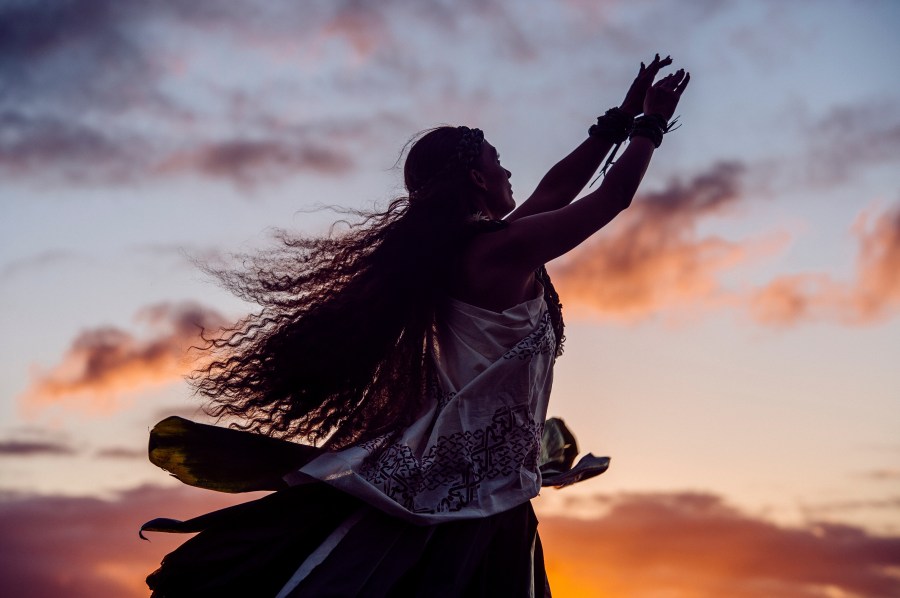
HONOLULU (KHON2) — The Merrie Monarch Festival began yesterday, April 20, in Hilo. For those lucky enough to attend festival, it’s more than a hula competition. It’s a powerful lesson in standing firm in who you are, where you come from and what you carry forward.
“The preparation is intense,” said Kumu Brad Lum. “It’s daily. A whole week of practice for just seven minutes on stage.” But even more than the dancing, Merrie Monarch teaches a deeper kind of strength — one that’s about being rooted, respectful and real.
And getting there? That’s a lesson, too.
For Joylynn and Kumu Lum, even getting tickets to Merrie Monarch is a process that takes planning, patience and a little luck.
“Applications have to be in by Dec. 1,” said Joylynn. “We sat together, filled out our applications, got our money orders, and mailed them at the post office to give us the best chance of sitting together.”
But it didn’t go exactly as planned.
“Kumu accidentally sent the receipt for the money order instead of the actual money order,” Joylynn said. “We were very stressed.”
Kumu Lum called the office. “They were super ʻoloʻolu. They understood and let us resend the money. But everything is by mail. Nothing is digital. They keep it traditional.”
And that’s the point. Merrie Monarch values what’s real, not what’s fast. Everything is done by hand just like the hula.
The power of showing up
Merrie Monarch started in 1964 as a way to boost Hilo’s local economy. It was named for King David Kalākaua, known as the “Merrie Monarch”, who loved hula and helped bring it back during a time when it was discouraged.
But by 1971, the festival had become something deeper. With the help of “Aunty” Dottie Thompson and cultural leaders like George Naʻope, the festival became a true celebration of Hawaiian culture.
Today, Merrie Monarch is a week-long event filled with dance, art, chanting, storytelling and celebration. It’s one of the most respected hula festivals in the world.
“You don’t even need a ticket to experience it,” Joylynn said. “At ʻImiloa, there’s lei-making, weaving, learning how to do hula. There’s stuff at the Palace Theater, too. There are craft shows all over Hilo. You just have to show up.”
Presence over power
The idea of “dominance” usually means control or force. But for Kumu Lum and Joylynn, real strength is presence.
“I don’t like talking about competition,” Kumu Lum said. “It’s a colonized way of thinking. Why should we have competition? King Kalākaua’s hula wasn’t about that; it was about love and giving.”
Joylynn agreed. “When I competed, I was so stressed. Everyone said, ‘Don’t think of it as competition. Think of it as perpetuation.’ That helped me. I was showing my aloha. I was honoring what my kumu gave me.”
For both of them, competition doesn’t come from being better than others. It comes from knowing who you are and acting with integrity.
“Hula students should have one word: humility,” said Kumu Lum. “That’s the most important value.”
The village behind the dancer
Preparing for Merrie Monarch isn’t something one person can do alone.
“It takes many people in the background to get you to Hilo,” said Kumu Lum. “It costs thousands of dollars. There are lei, costumes, food, housing. I tell everyone: if a hālau is fundraising, support them.”
Joylynn added, “Even if we’re not a competition-based hālau, we go to Merrie Monarch every year to learn and observe. It’s filled with our hula.”
Support means more than money. It means time, effort and commitment.
“Sometimes, students make mistakes,” said Kumu Lum. “I’ve seen many cry. You practice every day, almost seven days a week, and then you only have one chance.”
A lesson for everyone
Standing strong isn’t just for dancers. It’s for everyone: men, women, young, old.
“During my days, I was hot oil,” said Kumu Lum. “I thought I knew everything. But that’s not part of hula. That’s not the way. If you’re humble and filled with joy, that’s what matters.”
To lead is to serve. To assert presence is to uplift others. That’s what hula teaches, according to Kumu Lum.
“This is for our culture,” he said. “If Merrie Monarch is to thrive, we have to support it. We have to support our hālau. These are the keepers of our culture.”
You can click here to learn more about the Merrie Monarch Festival
Merrie Monarch is a living legacy
Every year, Merrie Monarch opens on Easter Sunday. The ceremonies begin with chant and protocol. Deities are honored. Traditions are kept.
“If you haven’t seen the opening, go see it,” said Kumu Lum. “It’s amazing.”
In 2025, the festival celebrates its 61st year. And while it began as a way to bring visitors to the Big Island, today its purpose is clear: to keep Native Hawaiian culture alive.
“The choreography takes months,” said Kumu Lum. “The kumu chooses who’s in the front line, second line, third, fourth. It’s a whole process. But what it really is — what it really teaches — is how to stand for something.”
And maybe that’s the biggest lesson of all.