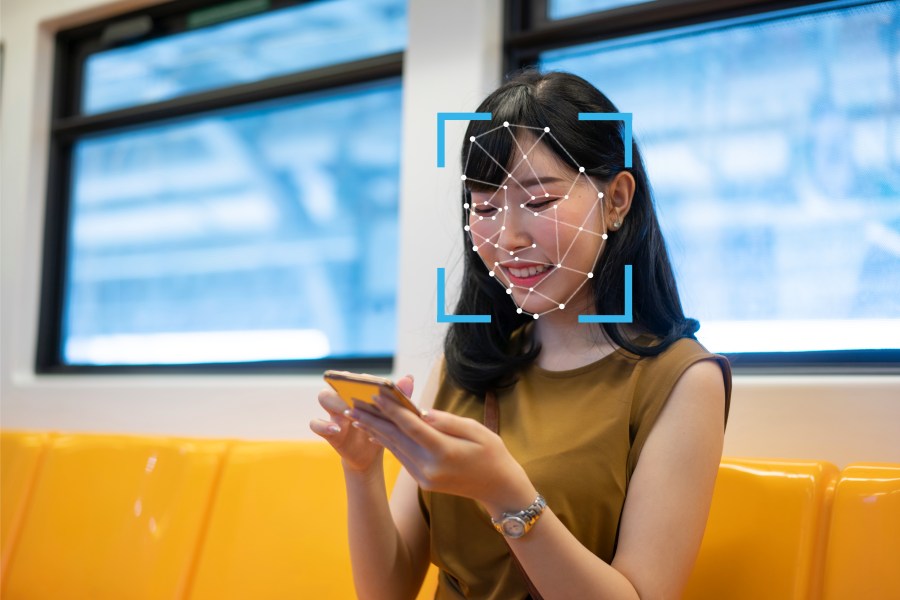
HONOLULU (KHON2) — If you’ve flown recently or plan to travel soon, then you may notice something different at airport security checkpoints: cameras that scan your face.
This is part of a new rollout from the Transportation Security Administration (TSA). It’s called TSA PreCheck Touchless ID, and it uses facial recognition technology to match your face to the photo on your ID.
If everything checks out, then you may not need to hand your ID to a TSA officer at all.
Sounds high-tech? It is. It’s also raising important questions about privacy, choice and how the government uses technology in public spaces.
Here’s what’s happening, what it means for you, and what to watch out for.
1. What is TSA PreCheck Touchless ID?
TSA PreCheck Touchless ID is a new option available for travelers enrolled in the TSA PreCheck program. The program uses facial recognition to confirm who you are. Instead of showing your license or passport, you simply look into a camera.
If the system matches your face with the photo on file, a TSA officer gives you the go-ahead and you move on to the next part of security.
There’s no passing over your ID and no digging through your bag for your passport. You’ll still need to bring your ID, though, just in case the system needs backup. TSA officers may still ask to see it.
2. Who can use it?
You must meet certain requirements to try TSA PreCheck Touchless ID. Here’s what you’ll need:
- Purchase a TSA PreCheck membership.
- A valid passport.
- A flight booked with a participating airline (Delta, United, or Alaska Airlines).
- To opt in during online or mobile check-in with your airline
This technology isn’t available everywhere, yet. So far, it’s being used in busy airports like:
- Los Angeles (LAX).
- Atlanta (ATL).
- New York (JFK and LGA).
- Washington, D.C. (DCA).
- Chicago (ORD).
- Salt Lake City (SLC).
- Las Vegas (LAS).
- Newark (EWR).
Check your mobile boarding pass. If you see a special marker for Touchless ID, then you’re set to try the facial recognition lane.
3. Is it really optional?
For now, the answer is yes. TSA indicated that using facial recognition is optional.
If you choose not to participate, then you can ask for a traditional identity check. You’ll still go through security like everyone else, just with a person instead of a camera.
But recent reports show it might not always feel optional. Some travelers have said they felt pressured to use it or didn’t realize they could say no. Others didn’t see clear signs explaining their rights.
A group of United States senators instigated a formal investigation into the program’s rollout and training practices. They’re concerned that travelers may not be getting enough clear information or enough of a real choice.
4. Why Is TSA using facial recognition?
On the TSA website, the agency indicated this technology makes travel:
- Faster by shortening wait times.
- More convenient by reducing the need to handle documents.
- More secure by helping spot fake IDs or imposters.
- Less risky during flu season or other outbreaks, thanks to less contact.
Facial recognition is also part of TSA’s bigger push to use biometrics. According to the TSA website, things like your face, fingerprint or eye scan have the ability to improve security across the board.
And it’s not just about convenience. TSA sees facial recognition as a tool for closing security gaps that could be used by people with fake IDs or bad intentions.
5. What about privacy and security?
This is where the conversation gets more serious.
TSA’s website claims the government does not store photos taken at the checkpoint. Once your face is matched and you’re cleared, the image is deleted immediately, unless the system is in a special test mode (which is rare and clearly marked).
The agency’s website said:
- Photos are not used for law enforcement or surveillance.
- The system is not connected to any police or immigration database.
- No photos are used outside the checkpoint process.
But many people, including lawmakers, aren’t convinced.
Senators from both parties are now demanding more oversight. They want the Department of Homeland Security to:
- Prove that facial recognition is more effective than existing systems.
- Show it does not create bias or unfair errors.
- Protect the public’s personal data and privacy.
- Provide clear ways for travelers to opt out.
6. Are there risks or errors?
Like all technology, facial recognition isn’t perfect. The TSA has reported a 3% false negative match rate in identity checks.
That means the system sometimes fails to match a face to the ID photo, even when it should. If this happened on a large scale, it could mean thousands of mismatches a day.
Studies have also shown that facial recognition can be less accurate for people with darker skin tones, women and older adults. This has raised equity concerns about who is most likely to be wrongly flagged.
The TSA website said it’s using top-rated systems that follow federal accuracy and fairness standards. But lawmakers want independent reviews to make sure these systems work equally well for all travelers.
7. What about kids and digital IDs?
Right now, children under 18 are not photographed using facial recognition; so, traditional ID checks are still used for minors.
TSA is also starting to test digital driver’s licenses that are stored on smartphones at some checkpoints. This means that in the future, your phone and your face might be all you need to travel. But those systems are also in early stages and come with their own set of privacy and security questions.
During test periods, TSA may collect and analyze some traveler data. They said this data is anonymized, encrypted and deleted within two years.
8. The big picture
Facial recognition at airports is growing quickly. TSA plans to expand the technology to more than 430 airports across the U.S. That means it could become the default way we verify identity at the airport.
But even as the system spreads, questions remain:
- Is this really about safety, or is it also about surveillance?
- Will opting out stay easy, or will pressure to comply increase?
- Can TSA guarantee fairness and privacy as the system grows?
Some lawmakers warn that facial recognition, if left unchecked, could become a nationwide biometric database that’s built without public debate or congressional approval.
U.S. Senator Jeff Merkley (D-Oregon) said it clearly: “This program could become one of the largest federal surveillance databases overnight.”
9. What can you do as a traveler?
Whether you’re excited about the new tech or concerned about privacy, here’s what you can do:
- Stay informed: Read signs at the checkpoint and ask questions.
- Know your rights: You can say “I choose to opt out” at any time.
- Check your airline account: Make sure your TSA PreCheck info is up to date.
- Talk to your kids: Let younger travelers know what to expect.
- Watch for changes: As this system expands, rules and tools may change, too.
Facial recognition is already here. The question is: how should it be used?
As airports turn to more advanced technology, travelers must be part of the conversation. Whether you’re flying to a neighbor island or across the continent, you deserve to know how your information is used and to decide what’s best for you and your ʻohana.
For more, click here to learn more about PreCheck Touchless ID, here for more information on facial recognition technology, here for more information on facial recognition technology at LAX, here for more information on TSA’s evaluation of digital identity technology, here for more information on Sen. Merkley’s letter, here for more information on the letter to TSA from 12 U.S. senators and here for more information on questions being raised about privacy.
Here’s what’s changing, how it works and what you should know before stepping into the new face-first future of airport travel.