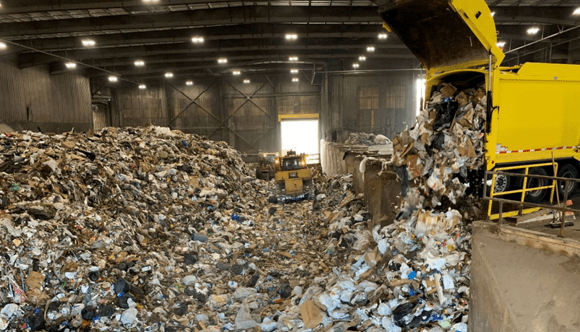
HONOLULU (KHON2) — The future of Oahu’s landfill sits in the hands of Gov. Josh Green.
Before the legislative session began, the City and County of Honolulu announced its proposed landfill site near Dole Plantation. But it received pushback from residents, environmental groups and farmers due to its location over a drinking aquifer and on agricultural land.
State Representative Sean Quinlan, who represents the district where the new landfill was proposed, authored legislation that would prohibit the construction of landfills over drinking water aquifers.
“The concern, first and foremost, has to be protecting our fresh drinking water,” Quinlan said. “The disaster at Red Hill didn’t happen overnight, it happened over many years. I understand the city’s engineers saying the lining will never fail but, I don’t believe you can guarantee a lining will never fail. It’s not worth the risk to our drinking water supply.”
The city assured the community toxins wouldn’t leak into the water 800 feet below.
“The last thing we would have done is anything, to the best of our knowledge and belief, that would have been toxic for anybody,” Mayor Rick Blangiardi said.
The current Waimanalo Gulch landfill in West Oahu is set to close in 2028.
With the closure of the current Waimanalo Gulch landfill in west Oahu set to close in 2028, Blangiardi says he is committed to finding a solution.
“We’ll probably have to expand beyond 2028 as we figure it out, it has capacity until 2035, but I’m not resigning ourselves to that and we’re also looking at what we can do for the community,” Blangiardi said. “We’re not going to resign and say it has to be at Waimanalo Gulch now and forever, we’re not going to do that.”
West Oahu City Councilmember Andria Tupola said it’s time to look at a new plan.
“I think it’s imortant that we protect the aquifers and I can see why the legislature proposed such a bill, and I think we have to get back to the drawing board,” Tupola said. “It’s super important for us that we try to move towards no landfills. I know a lot of people don’t believe it’s possible, but other countries have been doing it since 2009, so I think we have to open our minds to whatever technology is out there to not have to look for a landfill.”
According to the Swedish government website, non-recyclables are incinerated to produce energy, food waste is broken down and used as fertilizer, fuel, or energy and garden waste is composted while bulky waste is either recycled or incinerated.
Green’s office would not comment on what he plans to do with the landfill bill.
He has until the end of June to announce plans to veto the bill, can sign it into law by July 9, or do nothing and it becomes law without his signature.