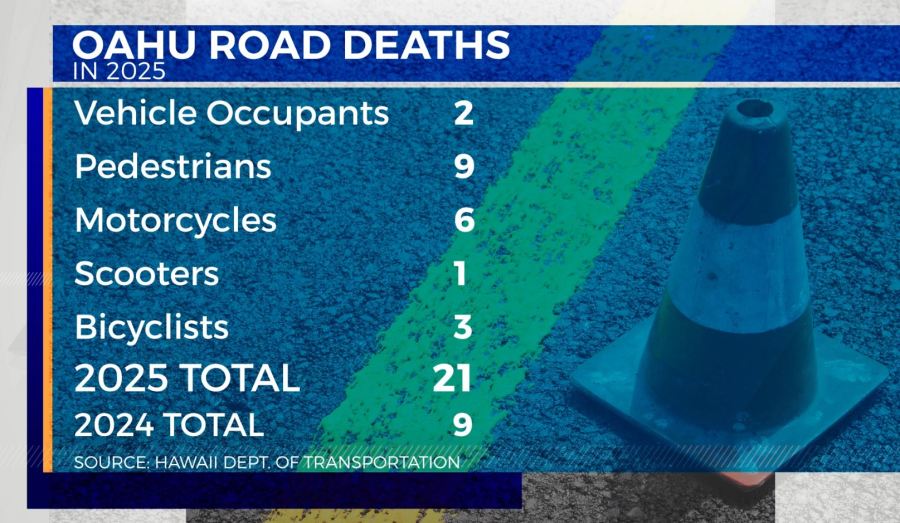
HONOLULU (KHON2) — There have already been 21 people on Oahu who have died in traffic collisions in 2025 and it is a steep increase compared to 2024.
There were only nine traffic deaths on Oahu at the same time in 2024, according to the Hawaii Department of Transportation.
“One traffic fatality is just too much for us. So it’s really disheartening to see where we are this early in the year,” said Honolulu Department of Transportation Services Complete Streets administrator Renee Espiau. “We are a little higher than we have traditionally been. Maybe last year was a little bit low, but generally, we are higher. So we are concerned.”
There have been 39 people who have died across the state and the DOT said speed is almost always a factor.
“We speed way too much in Hawaii, especially considering that we’re in close proximity to each other with lots of volumes of traffic and, of course, driving to communities where there’s a lot of conflicts between bicyclists, pedestrians and drivers,” said HDOT director Ed Sniffen.
Motorcyclists have also been frequent victims in 2025 — there have been one each on Maui and Kauai, three more on Kauai and six have died on Oahu in 2025.
The HDOT director said he is disappointed that a measure to require bikers to complete a motorcycle safety foundation and basic rider course fell short.
“No, you don’t have to go through the rider course for it. We wanted to make it mandatory with the bill that was going through this year. It didn’t pass, but we’ll try again next year. I think it just makes sense,” Sniffen said.
The City has noticed some areas that have a higher rate of severe injuries.
“King Street, Beretania, Kapiolani, you know, North King Street, Dillingham, those kind of bigger arterial roadways,” said Espiau. “And so now we’re really focusing our efforts, trying to double down on improving safety.”
Stolen jewels, boa constrictors killing owners, check out Weird News here
There are several ongoing road projects to improve driver safety, including the installation of more speed humps in school zones and around senior living facilities.
Click here for more information.