HONOLULU (KHON2) — Local award-winning artist Leilehua Lanzilotti has long been known for her work that merges diverse art forms that blends music, sculpture and dance with an intricate exploration of her Hawaiian heritage.
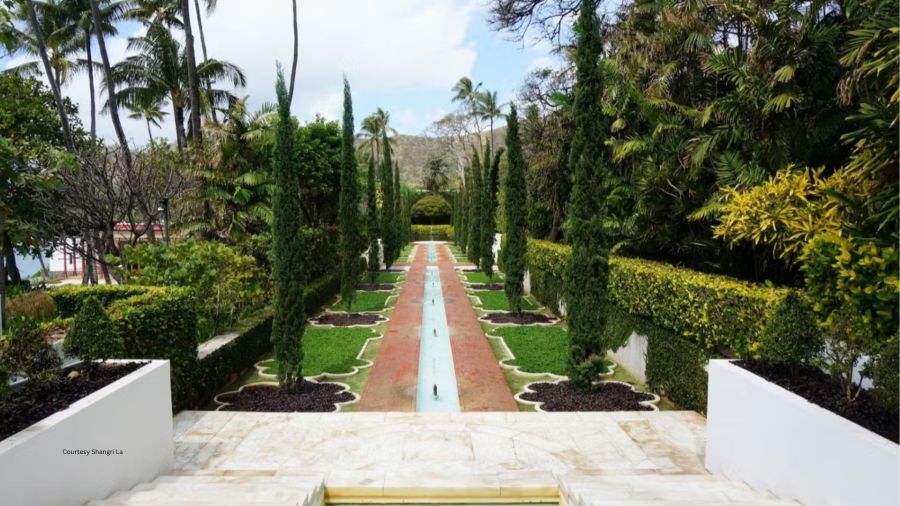
Recently, Lanzilotti has been at the center of an exciting new initiative aimed at amplifying the voices of Native Hawaiian artists: the Wehiwehi artist cohort residency at Shangri La, the Doris Duke Foundation’s center for Islamic art and cultural exchange.
But this is more than just a residency. It’s a creative laboratory for artistic collaboration, one that bridges traditional Hawaiian cultural practices with cutting-edge contemporary performance.
Lanzilotti’s deep connection to both Hawaiʻi’s cultural expression and experimental art has shaped her career. Growing up on Oʻahu and surrounded by contemporary art, particularly at the Contemporary Museum on Tantalus, Lanzilotti was steeped in an environment that encouraged playful exploration and artistic freedom.
“I was really lucky to kind of grow up hanging out at the contemporary museum,” Lanzilotti shared. “It was this really beautiful space that uplifted contemporary art, and for me, it was like my playground.”
Her upbringing in such a dynamic environment has had a lasting impact on her art. Today, her work traverses multiple mediums, from classical music to multimedia installations, often weaving sound and visual elements in ways that evoke the interconnectivity of Hawaiʻi’s cultural and artistic practices.
“I perform on the viola, but I also work with sculptures, ceramics, and paper,” Lanzilotti explained. “I draw inspiration from everything around me: art; objects; and, of course, the world of Hawaiian dance and music.”
In addition to her innovative art, Lanzilotti is known for advocating for greater support for artists in Hawai’i. One such platform is the Wehiwehi residency.
This residency is a space for creating and an intentional gathering of Native Hawaiian and diaspora artists exploring the intersection of traditional and contemporary practices that provides a much-needed opportunity for these voices to be heard in the broader arts community.
“Shangri La is more than just a museum,” Lanzilotti remarked. “It’s a place where we can engage with our community, where we can elevate the voices of Native Hawaiian artists and bring together both traditional and contemporary practices.”
Lanzilotti’s excitement about Wehiwehi reflects her commitment to nurturing artistic spaces that celebrate both heritage and innovation. The program, a partnership between Shangri La and the Doris Duke Foundation, is designed to support artists whose work engages with Native Hawaiian cultural preservation, contemporary performance and technology.
The Wehiwehi residency brings together a small cohort of artists to engage in collaborative workshops, cultural re-centering and studio experiments. This initiative encourages the fusion of ecological knowledge with modern performance techniques in order to foster a creative space that respects tradition while embracing innovation.
“The residency is about making sure that Native Hawaiian voices are not only heard but amplified,” Lanzilotti said. “It’s about bridging those gaps and providing artists with the platform and support to create work that resonates with both local communities and global audiences.”
What makes Wehiwehi stand out from other artist residencies is its holistic approach to the artistic process. It isn’t just about creating new work; it’s about community-building and offering opportunities for ongoing collaboration among artists.
“Shangri La’s unique sense of place allows us to come together and think about art in a way that feels connected to the land, the people, and the culture,” Lanzilotti explained. “It’s a space where transformation can happen, and it provides an inspiring environment for all of us to work in.”
This residency is also a response to the increasing challenges faced by local artists, particularly in Hawai’i where rising living costs are forcing many to leave or scale back their work.
Lanzilotti emphasized the importance of sustaining art practices in Hawai’i: “We’re getting priced out of being here, and it’s harder to stay and create. These awards and initiatives are crucial in allowing artists to keep making work that is rooted in place.”
In addition to the Wehiwehi residency, Lanzilotti’s recent recognition through the Creative Capital Award — a prestigious grant that provides funding and resources for innovative projects — marks a significant moment in her career.
Creative Capital’s unrestricted project grants allow artists like Lanzilotti to grow their work over several years, ensuring sustainability and the space to experiment. Lanzilotti has used this funding to expand her artistic practice, integrating her sound world with visual experiences that communicate the interconnectedness of Hawaiian culture and contemporary art.
For Lanzilotti, the fusion of these two realms — traditional Hawaiian culture and contemporary performance — is essential for the continued growth of both the arts and the Hawaiian language.
“The language is alive when it’s used in contemporary work,” Lanzilotti shared. “It’s important that we show we’re still here, that we’re still creating new work and pushing boundaries.”
Through Wehiwehi and other initiatives, Lanzilotti is helping to ensure that the future of Native Hawaiian cultural expression is not just preserved but reimagined.
Shangri La’s role in this initiative extends beyond merely hosting artists. It serves as a facilitator of dialogue, creativity and community. The museum, while known for its collections of Islamic art, is also dedicated to supporting contemporary art practices, especially those that engage with issues of cultural identity, social justice and environmental sustainability.
With Wehiwehi, Shangri La is providing a much-needed platform for artists to explore new ways of blending traditional knowledge with modern tools.
Looking forward, Lanzilotti sees a bright future for Wehiwehi, especially as it expands beyond its initial phase.
“It’s going to be exciting to see how this residency grows,” they said. “The first phase is just the beginning. There’s so much potential here to bring more artists into this conversation and to continue to strengthen the community.”
For artists and art lovers alike, Wehiwehi represents a groundbreaking opportunity to engage with Hawai’i’s dynamic arts scene.
By elevating Native Hawaiian voices and supporting innovative work that connects the past, present, and future, the residency is shaping the next chapter in the island’s cultural evolution.
To learn more about Shangri La, click here.
As Lanzilotti continues to lead the charge in bringing contemporary Hawaiian art to the forefront, the future of art in Hawai’i has never looked more promising.