LIHUE, Hawaii (KHON2) — A Kauai councilmember is sounding the alarm on the coconut rhinoceros beetle, calling it an an “all hands on deck” emergency.
She says the destructive beetle has been spotted from Hā’ena to Waimea.
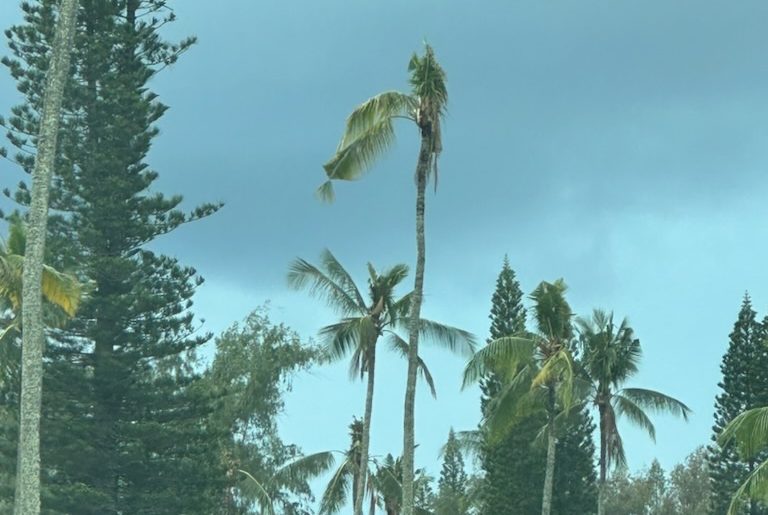
In April 2024, KHON2 shot video of the Wailua Golf Course containing plenty of healthy-looking palm trees over the course.
But now, community members and leaders are sharing photos of several trees on the course showing signs of coconut rhinoceros beetle infestations.
“Once you start to see it, that means they were doing that work six to nine months ago,” explained Landon Rone, who has been trying to manage the beetles on Oahu for years. “They’re just waiting for that palm frond to open up and then that visual cue is anywhere from six to nine months behind the curve because the beetle has already been eating at your tree.”
And that’s why newly-elected Councilmember Fern Holland, who is also the Parks and Recreation chair, is concerned.
“I’m pulling the emergency alarm trying to get attention and support as I’ve realized this is spreading really quite rapidly,” she said.
Holland also said she has received calls from tree trimmers across the island saying trees showing no signs of the beetle six months ago are now showing signs in almost every tree in certain areas.
“It spreads rapidly, you don’t know how bad it is until it’s there,” she added. “I spoke with people in Guam who said the same thing, ‘We didn’t take it seriously, and now we have no coconut trees.’ So I’m doing everything I can for Kauai to take it seriously.”
Photos taken by KHON2 on Oahu’s North Shore in 2024 show plenty of healthy palm trees, compared to the same trees today only having one, two or even zero palm fronds remaining.
The beetle was first detected on the Garden Isle in May 2023.
“I’ve been trying to get everyone to understand that this is an all hands on deck issue,” Holland said.
She said most counties don’t have the experts, funds or necessary means to respond to a biosecurity threat, so she went to Washington D.C. to try and get funding from the Department of Defense, since the bug was first detected at Joint Base Pearl Harbor Hickam back in 2013.
“Unfortunately, due to cuts we’ve seen, we’ve actually lost people who were helping,” Holland said.
Earlier this month, Kauai County launched a new website for residents where they can report sightings and learn more about high risk materials.
Holland and Rone said mulch management is key.
“It’s laborious, it’s tedious, and it’s a long-term commitment, but that’s what it’s going to take to control the population and breeding cycle,” Rone said.
He said turning the mulch over and exposing it to sunlight can help kill the larvae.
Experts say the specific type of netting needed to successfully capture the beetles is an illegal fishing net and hard to get sent to Hawaii.
Anyone with coconut rhinoceros beetle sightings on Kauai is urged to report it immediately.