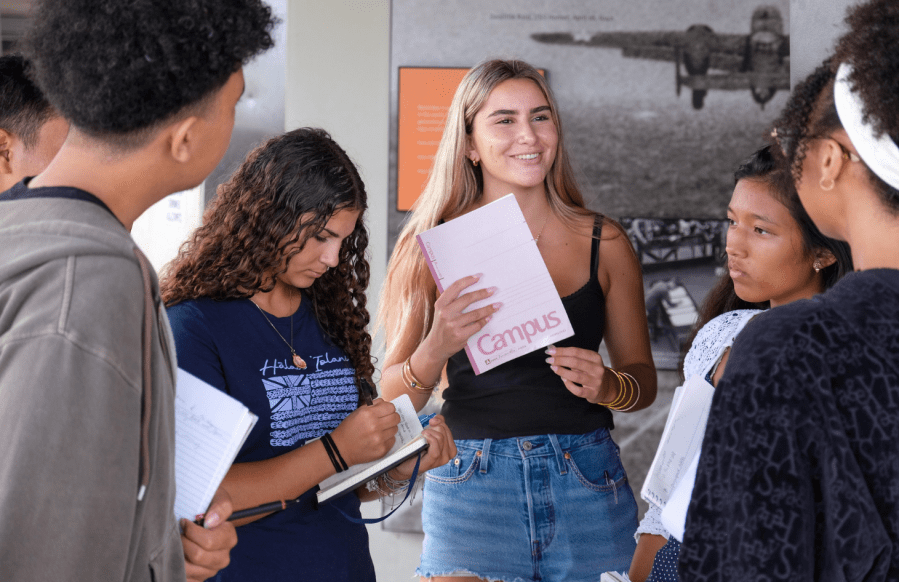
HONOLULU (KHON2) — More than 30 Hawaiʻi high school students and rising University of Hawaiʻi at Mānoa freshmen took part in a free UH program aimed at building future national intelligence leaders.
The statewide program offered by the university’s College of Social Sciences, known as the Academy for Hawaiʻi Intelligence Studies Summer Program, ran from June 16 to June 28. For their participation, students received a free, three-credit university course, Introduction to World Politics.
Participating students were able to examine critical world events in real time as they unfolded throughout the length of the program.
“Having a war going on between Israel and Iran, [the students] just came with so many questions,” program director and UH professor Jairus Grove said. “They wanted to understand why it was happening. Why was the U.S. going to get involved? Should the U.S. get involved? And so I think having a global crisis happening while they had an audience for understanding that crisis was really unique.”
The first week of the program was held remotely, with students studying the foundations of international politics and national intelligence. The second, in-person week involved immersive simulations and guest speakers at UH Mānoa, and a field trip to Pearl Harbor.
“Because of this course, I’m heavily debating going into political science now,” said Kaimana Lindsay, who participated in the program. “I think it’s really interesting and something that the world is going to need more of.”
This year’s program cohort was made up of students from public, charter and private schools. The annual program provides early college access to local students with a minimum 3.0 GPA.
“Coming here, I felt really challenged, and I loved it,” said participant Madison Au. “I would love to work with intelligence and research with sociology and international relations.”